Apr 28, 2020

The Famous Five Have Plenty of Fun


The Famous Five were Britain's answer to the Boxcar Children or the Hardy Boys, five youthful detectives who appearing in 21 volumes by Enid Blyton from 1942 to 1962.

There have also been original Famous Five novels in French and German, films in English, Danish, and German,  comic books, a video game, and even a stage musical.
The Famous Five are really the Famous Three:

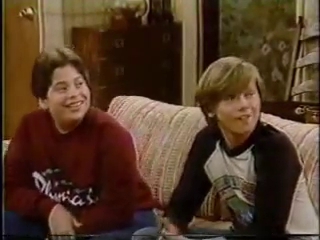
1. Julian Bannard, age 13 (right), described in boys' adventure novel terms as tall, strong, and muscular.  He was played by Marcus Harris in 1978 and Marco Williamson in 1995.

2. His brother Dick, age 12 (far left), a practical jokester and standard boys' adventure novel sidekick, played by Gary Russell in 1978 and Paul Child in 1995.

3. Their cousin George, age 12 (center), a girl who "wants to be a boy."

The other members are:
4. Their young sister Anne, who doesn't do much except get scared and "stay here where it's safe."
5. The dog Timmy (a regular dog, not talking).

Perpetually 12-13 years old but acting several years older, the Five solve their mysteries during school holidays, usually while on vacation on Kirrin Island.  There are kidnappers, smugglers, secret rooms, gypsies, decadent circuses, ghosts that really aren't, and lots of scenes set on the beach, giving Blyton the opportunity to describe the boys' physiques in swimsuits.


One might suspect that the family dynamic and the presence of both boys and girls would eliminate buddy-bonding, but in fact Julian and Dick behave rather like the Hardys, going off alone with each other to investigate the mystery, and there are lots of other kids to interact with.

The gay-vague George is most likely to seek outside friends, mostly other girls "who want to be boys," such as Berte and  Jo, but Julian does his share of bonding with older boys as he tries to establish his own adolescent identity.


The gender-transgressive girls are not the result of gay-friendliness, but of sexism: Blyton thought that adventuring was a masculine preserve, so any girl with an interest in danger and excitement must "want to be a boy."

There have been three incarnations on British tv.  The 1978-79 series was never shown in the U.S.

The 1995-97 series was a period piece, set in 1940s Wales.

In 2008, an animated series featured the children of the original Famous Five.  Even George has a daughter (but her partner is never mentioned; maybe she had a wife).

Apr 27, 2020

It's Your Move

Before Married with Children demolished the myth of the euphoric nuclear family, It's Your Move (1984-85) did the same for the teencom.  Matt Burton (Jason Bateman, who would go on to star on The Hogan Family) seems to be a perfect teenage boy, but he's actually an unscrupulous, amoral operator, running a variety of scams and illegal businesses with the assistance of his best friend Eli (Adam Sadowski).  His only soft spot is for his mother, Eileen (Caren Kaye), so some of his schemes involve doing things for her, like getting her a raise at work.

Then struggling writer Norman Lamb (David Garrison, who would go on to star on Married...with Children) moves into the apartment across the hall and starts dating Matt's mom.  It turns out that there is also an unscrupulous, amoral operator lurking under his "nice guy" facade.  But not to worry, he has only honorable intentions.

Matt and Norman begin a battle of wits, cons, and blackmail, as each tries to gain power and demonstrate the other's true nature to an oblivious Eileen.

It was a welcome surcease from the TGIF sitcom jungle. Plus beefcake (David Garrison in extremely tight jeans), gay symbolism (hiding a secret life), and a decided lack of girl-craziness in Matt. Though his relationship with Eli didn't quite make the intensity of a homoromance.
The producers had high hopes for It's Your Move.  A tie-in novel was authorized, and up-and-coming star River Phoenix had a guest shot in the pilot.


Teen magazines began nonstop gushing over freckle-faced Jason Bateman..

Unfortunately, the network shoved the series into a Wednesday night timeslot opposite the blockbuster Dynasty, with the sixth season of The Facts of Life as a lead-in.  I watched, but apparently nobody else did.  Only 18 episodes aired.  You can see them on youtube.

Apr 25, 2020

The Prisoner: We Want Information

When I was a little kid, we had only 3 stations, but sometime in the early 1970s, we got PBS -- the Public Broadcasting System -- and with it, a British invasion.  Suddenly I could see Doctor Who, The Hitchhiker's Guide to the GalaxyMonty Python's Flying Circus, The Tomorrow People, and even fluffy comedies like Father Dear Father and No, Honestly.  I guess they figured that anything British was bound to be educational. They were certainly easier to find subtexts in.

Take The Prisoner, which appeared in Britain in 1966-67, and on PBS in the mid-1970s.

The plot: a British secret agent (Patrick McGoohan) resigns, angrily, then goes home and packs for a trip.  He is gassed, and awakens in a scenic, well-scrubbed Village, where everyone has a number rather than a name ("You are Number Six.").  The Villagers are mostly kidnapped secret agents, from a variety of countries, more or less brainwashed and docile.


The mysterious Number Two, who is in charge of the Village, wants "information."  Number Six wants to escape, or, failing that, to find out who his keepers are.  But plots soon moved beyond the "Why did you resign?" maguffin to explore questions of conformity and individuality.  In order to live together in a community, we must require certain behaviors and banish others, but at what point does the need for conformity impinge upon the rights of the individual to think and feel what he pleases?

It was heady viewing for teenagers in the 1970s, on the par with Animal Farm and Brave New World.  And it was especially evocative for gay teenagers, who were told, day after day, hour after hour, "You must conform. You must desire the opposite sex, date, have sex, marry."


The gay symbolism made up for a decided lack of beefcake -- handsome Patrick McGoohan never so much as unbuttoned a button, not even to work out.  And a lack of bonding -- though there might be a homoerotic subtext in the cat-and-mouse game played by Number Six and the current Number Two (the Village leader changed in almost every episode).

However, there was one plus: virtually no heterosexual content.  Sometimes Number Six got a girlfriend, or pretended to in order to harass Number Two, but they never kissed.  McGoohan had it written in his contract -- no kissing girls (but not because he was gay; he wanted to stay faithful to his wife).

McGoohan starred in many other movies during the 1970s and 1980s.  He is perhaps most famous for playing King Edward in Braveheart  (1995), and eliciting homophobic audience cheers by pushing his gay son's lover out a window.  Not that I believe McGoohan, who died in 2009, actually condoned throwing gay people out of windows.

Apr 21, 2020

Gay Connections on "The Facts of Life"

The Facts of Life (1979-1988) was a TGIF sitcom (that aired on Wednesday nights) about four girls with disparate backgrounds who, for contrived  reasons, are working in the cafeteria of a private girls' school under their boss/mentor  Mrs. Garrett (Charlotte Rae)

In the first season, there were a lot of girls, and  "the facts of life" referred specifically to universal heterosexual desire ("when the boys you used to hate, you date"), but after that the show concentrated on the Fab Four and general Life Lessons.

When the world never seems to be livin up to your dreams
And suddenly you're finding out, the facts of life are all about you.

Wait -- I thought adolescence was a time of infinite possibility.  The world doesn't start squashing your dreams until your mid-20s.


Oh, well, the four girls were (clockwise from bottom left):

1.  Young, black, catchphrase-spouting Tootie (Kim Fields).  One episode I saw had her in a mania over pop star Jermaine Jackson, which caused Mrs. Garrett to reminisce about the Frank Sinatra mania of her youth.  She learns to be more cautious and less impulsive.

2. Spoiled rich girl Blair, whose parents basically own the school (Lisa Whelchel).  She learns humility.

3.Motorcycle-riding juvenile delinquent Jo (Nancy McKeon), whom everyone assumed was a lesbian, but she was straight (on the show, anyway).  She learns to solve her problems with words, not with fists.

4. Natalie (Mindy Cohn), who makes self-depricating jokes about being portly or Jewish, or both.  She learns to overcome her poor self-image.  Later in the series, she has sex with her boyfriend (after discussing it in detail with every character except Blair; a conservative Christian, Lisa Whelchel refused to be in the episode).

There were some men running around occasionally, such as George Clooney before he became a big star as a handyman-hunk, and Mackenzie Astin as a vulnerable kid that the girls sort of adopt.

No gay references, except in the first episode (August 24, 1979), when Blair criticizes another girl for being a tomboy, and insinuates that she is "strange" (hat is, a lesbian).  Mrs. Garrett takes control and helps the girl become more feminine.  Problem solved.

Also, there's the ongoing lesbian subtext with Jo, and for several seasons Cousin Geri (Geri Jewell, a comedian with cerebral palsy) was a regular, and more or less obviously lesbian,

Geri Jewell is gay in real  life, Mackenzie Astin is bisexual, and most of the other cast members are gay allies.  Even Lisa Whelchel; not all conservative Christians are screeching homophobes (see her interview in Chicago's gay newspaper, the Windy City Times).


Related Posts Plugin for WordPress, Blogger...