Showing posts with label trapped. Show all posts

Apr 29, 2026

Gilligan's Island: Gilligan and the Skipper, a gay couple? The Professor asexual? Ginger a drag queen?


Gilligan's Island (1964-67), the tale of seven nitwits who set out from Honolulu for a “three hour tour” and end up stranded on a desert island,  has become iconic for its ineptness and naiveté. They pull endless supplies from nowhere, build anything they need (except a boat) from bamboo and coconuts, hear endless radio news stories about their situation, and get a steady stream of visitors who promise rescue, but betray them or forget the island's location.  Even Santa Claus dropped by to offer holiday cheer.

But  actually, it was no more inept or naive than other 1960s sitcoms. The Beverly Hillbillies lived as multi-millionaires in Beverly Hills for many years, yet continued to wear hillbilly outfits, eat possum stew, and refer to the swimming pool as a "cement pond." 

In case Gilligan's Island and its endless reruns came  before your time, the seven castaways are, according to the theme song:


Gilligan, a "mighty sailing man" (in red), and the Skipper, "brave and sure" (in blue).  Color tv was brand new, so they used bright primary colors.

They became partners during the War, presumably the Korean War,  and now ran an island tour service out of Honolulu.  

Five passengers sign on for the "fateful trip" that was supposed to last for three hours,  "lunch provided."

3-4. Mr. and Mrs. Howell, "the millionaire and his wife," who for some reason brought suitcases full of money on the tour.

5. Ginger (the redhead), a glamorous Marilyn Monroe-style "movie star," who has a huge number of acting credit in very bad movies.

"And the rest," until the rest complained and got a mention in the theme song.

6. "Mary Anne," a wholesome Kansas farmgirl.

7. "The Professor,"  who has a B.A. from USC, a B.S. from UCLA, an M.A. from SMU, and a Ph. D from TCU, and is an expert on the languages and cultures of the "savage" natives of the area, yet works as a high school science teacher.

Straight Boomer boys had endless debates about which they would prefer to date, Ginger or Mary Anne.  But there was a lot for gay boys to like:


1. Beefcake
First mate Gillian (Bob Denver, below) was slim, smooth, and occasionally shirtless.

Lithe, hard bodied Denny Miller, a 1959 Tarzan (top photo, appeared twice, as a "jungle man" and as as a surfer who rode a wild wave all the way in from Honolulu.


 In February 1965, Kurt Russell appeared as a jungle boy, wearing only a loincloth (he counts as beefcake when you're five years old)

Even the Professor took off his shirt a couple of times.

2. Utter lack of heterosexual interest.

There was lots of heterosexism, of course.  When the Professor wonders why headhunters would abduct only the girls, Gilligan quips “Because they’re boys!”  

When Mrs. Howell becomes the recipient of anonymous love letters, she and her husband interrogate Gilligan, the Skipper, and the Professor.  They all claim innocence.  "But that's impossible!" she exclaims.  "We've asked everyone on the island!" Ginger and Mary Anne are omitted.

More after the break

Mar 26, 2026

Lost in Space (the original series): Camp sci-fi with with a cute boy and a cool robot. Plus Billy Mumy all grown up.


My parents didn't approve of science fiction -- they thought it would promote atheism.  But   Lost in Space (1965-68) aired before their favorite hayseed comedies, The Beverly Hillbillies and Green Acres -- so we watched.  

In the far-future year 1999, a family of space colonists sets off for Alpha Centauri in their cool flying-saucer spaceship, the Jupiter 2.  An evil spy sabotages the ship, so they veer off course, and are "lost in space."  Presumably they have warp drive.

The first season featured realistic science-fiction adventures, but then it become more and more camp, like Batman, the competition on the other channel, culminating in a giant talking carrot that wanted to change the Robinsons into trees. 


I don't remember much, just scattered images: 

A lonely boy from the other side of the looking-glass.
A demonic being claiming that he's as human as the rest of them.
The robot saying "Danger, Will Robinson!"
An alien robot saying "Crush! Kill! Destroy!"

And I remember the fandom.  Kids loved Lost in Space.  Star Trek was too grown-up -- Captain Kirk was always kissing a scantily-clad alien babe -- but Lost had no hetero-romance (at least we didn't notice any).  


And Star Trek had no kids.  Lost had Billy Mumy (pronounced moo-mee), a busy child star with previous roles on The Twilight Zone and Village of the Giants Not only because he was cute, and knew it, getting teen idol attention at the age of twelve -- but because his character, Will Robinson, was bright and resourceful, a respected crew member, never told "you're just a kid" or "wait here where it's safe."


Star Trek had no comic relief, but Lost had Dr. Smith (Jonathan Harris), an accidental stowaway (originally an enemy spy trapped aboard while trying to sabotage the voyage, but they soon forgot about that).  Some fans think today remember him as a pedophile with an inappropriate interest in Will, but I recall their relationship was completely innocent.  They were friends because he was a big kid himself, an unrestrained id.  Plus lazy, cowardly, and  incompetent, so none of the adults wanted to hang out with him.


John Robinson (Guy Williams), the patriarch of the family (Guy Williams), didn't have much to do: Will and Dr. Smith stole the show.  But I recall that he was not at all interested in girls. He had a wife, Maureen (June Lockhart), but they behaved like colleagues, with few moments of tenderness and none of intimacy. 

Guy Williams had previously starred in several buddy-bonding projects, including Zorro (1957-59) and Damon and Pythias (1962), leading to speculation that he was gay in real life.  
    

More after the break

Jan 5, 2026

Shock Treatment: Romance is Not a Children's Game


In the spring of 1982, I went to a midnight showing of Shock Treatment, which was widely advertised as "the sequel to The Rocky Horror Picture Show!"  

Actually, I saw it five times, because in the days before video rentals, DVDs, and streaming services, once a movie left the theater, it was gone for good.


It starred Brad and Janet from the original movie, played by different actors (Cliff de Young, Jessica Harper): Barry Bostwick was unavailable, and Susan Sarandon wanted too much money.

Cliff DeYoung (top photo) had been the lead singer of the 1960s band Clear Light, and the star of Sunshine (1973), about a struggling musician with a dying wife. Ugh!  But his signature song, "My Sweet Lady," charted at #14.  He also appeared in Hair on Broadway, and went on to over 80 tv and movie appearances, including Star Trek: Deep Space Nine, The X-Files, Get a Clue, and Diagnosis: Murder. 

Jessica Harper had toured in Hair with Cliff, and starred in Phantom of the Paradise, Love and Death, and Suspira.  She would go on to over 50 movie and tv roles, seven albums, and eleven children's books.

No other characters from Rocky Horror, no references to Rocky Horror, no sweet transvestites, no gay relationships, no references to gay people except for a racist/homophobic anecdote!


But once you get over your initial disappointment, Shock Treatment presents an interesting conceit: the world is a tv studio, and everyone a player (shades of Shakespeare).  Everyone is under surveillance, everyone is acting in a show within a show within a show.  There are no private moments; everyone is always being observed, commented on, controlled.  Sort of like social media today.

And they're trapped.  Like many stories with gay symbolism, there is no way out.  This is the whole universe.

The story is a heterosexist fable: studio owner Farley Flavors is in love with Janet, so he hires Drs. Cosmo and Nations McKinley (Richard O'Brien, Patricia Quinn, reprising their incestuous brother-sister romance from Rocky Horror).  They institutionalize Brad as "an emotional cripple" in their  psychiatric-hospital Faith Factory program.  To make Janet forget about Brad, they groom her to star in her own show.

Jessica Harper has a much stronger voice than Susan Sarendon, the original Janet.  Shock Treatment is worth watching just to hear her paeon to egotism, "The Me of Me"

Deep in the heart of me, I love every part of me
All I can see in me is danger and ecstasy
I'm willing to die for me.
One thing there couldn't be is any more me in me

More after the break

Oct 17, 2025

Gulliver's Travels: Classic literature, tie-up games, and heterosexism


When I was a kid,  fictional books were strictly divided into "boy" and "girl."  Boys got tales of swashbuckling adventure: Treasure Island, The Three Musketeers, Ivanhoe. Girls got families and horses: Rebecca of Sunnybrook Farm, Little Women, Misty of Chincoteague.

Both boys and girls got Swiss Family Robinson and Gulliver's Travels, maybe because they had both families and swashbuckling.

Although the hero of Jonathan Swift's 1726 satire visits many fantasy countries, including Laputa, Balnibarbi, Luggnagg, Glubbdubdrib and Japan, the bowlderized versions we read invariabley concentrated on Lilliput, the land of the little people, and omitted the parody of nitpicking religion.


The main illustration was invariably Gulliver on the beach, tied by innumerable tiny ropes. It was strangely erotic, with Lilliputians walking all over Gulliver's body (sometimes standing directly on his bulge, as if it was a little hill).  It was hard to resist imagining a comparison between a Lilliputian and Gulliver's  endowment.


The oroginal novel ontained no heterosexual romance.  Indeed, after Gulliver's stay among the sentient-horse Houyhnhnms, he can barely stand to be in the same room with his wife. But film versions always had to add some.


The 1939 Fleischer animated version popped up on tv occasionally. It stayed in Lilliput, and had Gulliver facilitating a Romeo-and-Juliet style romance.


The Three Worlds of Gulliver
(1960) saddled the hapless merchant (played by gay actor Kerwin Mathews, left) with a fiancee who shares in the adventure.

More after the break

May 15, 2025

Blake Bashoff: "Bushwacked," "Big Bully," and a goat ranch with his husband

 
14-year old Blake Bashoff became a gay kid favorite for Bushwacked (1995):  Max (Daniel Stern),  hapless delivery guy who gets mixed up with organized crime and must go undercover as a scout leader, buddy-bonds with Gordy (Blake), and saves him from a literal cliff-hanger.


Blake continued the gay-subtext roles in Big Bully (1996), playing the bully who harasses and then makes up with Cody McMains.


In  The New Swiss Family Robinson (1999), he displays no heterosexual interest, instead lettin ghis brother Shane (John Asher) romance the desert-island girl.  That is not his d*ck


He began playing gay characters in 2001, with Eric Brown, an abused gay teen taken in by the genial judge and her family on Judging Amy (2001-2003).

Blake's jumpy nervousness and wounded expression got him cast as some murderers or arsonists, usually gay-vague, but then he jumped back into gay characters with Duncan, the only gay student at a magic academy on a 2004 episode of the paranormal Charmed.


More after the break

Mar 5, 2025

Russell Johnson: The Professor and His Gay Son

Everyone in West Hollywood knew Russell Johnson, who played the Professor on Gilligan's Island.  I met him once, and saw him a few times at events.  He was a gay ally, primarily due to his son David..


Everyone in West Hollywood knew David, too -- Alan (my ex-porn star roommate) dated him.  He was a fixture in the bars, at the French Quarter, and at the AIDS Project of Los Angeles.  Later he was named AIDS Coordinator of the City of Los Angeles (he died in 1994).

Russell's career began during the 1950s, with lots of roles in Westerns and sci-fi movies: look for him in the MST3K rendition of The Space Children (1958). 


In the late 1950s, he moved into tv, with guest spots on Twilight Zone, Thriller, Laramie, Rawhide, and such hip-detective series as Adventures in Paradise and Hawaiian Eye.  But Boomers will always remember him for Gilligan's Island, a "trapped far from home" sitcom about seven people who set sail from Honolulu for a "three hour tour" and end up trapped on a desert island.

The Professor was an egghead of the old school, an expert in every field of science from astronomy to zoology, who constantly amazed kids in the 1960s by concocting radios from coconuts.  His utter lack of interest in the two female castaways, Ginger and Mary Anne, gave me some of my first gay subtexts.

And some of my first beefcake, in his occasional shirtless scenes.

Although typecast as the Professor, Russell continued to work steadily during the 1970s and 1980s.  But he devoted most of his time to raising AIDS awareness and taking care of David.

His last screen role was in 1997, in Meego, about an alien boy hiding out on Earth. He played "The Professor."

Russell died in 2014.

Nov 17, 2023

Saturday Morning with Joel and the Bots

During the 1990s, when I was living in West Hollywood, we watched a show called Mystery Science Theater 3000 every Saturday morning, before gong off to buy groceries or go to the gym or do whatever errands needed doing.

I remember a thousand Saturday mornings, eternal, brightly-colored, golden like Lewis Carroll's "golden afternoons," except in my memory  it wasn't summertime.  It was always those magical few weeks between Thanksgiving and Christmas.


MST3K was about a grown-up kid lost far from home: the smiling, laconic Joel (Joel Hodgson) has been zapped into space, onto the phallic-looking "Satellite of Love,"  where two mad scientists torture him by forcing him to watch horribly inept "cheesy movies."
 
After five seasons (1989-1994), Joel escaped to Earth, and the mad scientists abducted the hunkier Mike  (Mike Nelson above), who stayed on for ten seasons, until the series ended in 2004.


Joel, Mike and the "bots" (their robot chums, Tom Servo and Crow) stayed sane through the worst of bad-movie torture by making fun of the artifice and ineptness -- jokes, pop culture references, and sarcastic comments came fast and furious.  There were also interstitial sketches and comedy bits, often with guest stars from the movies being riffed.

The riffs and interstitials often made homoerotic subtexts visible, and many of the movies featured extensive beefcake, but that's not enough to make my memory of the basic-cable farce "golden."


Maybe MST3K was a metaphor.  Most gay people are trapped far from home.  The overlords are constantly torturing them with heterosexist statements and scenes, proclaiming over and over again that no gay people exist, hoping that eventually they will cease to exist.  The only way to stay sane is to laugh, to riff on the ineptness and artifice of the heterosexist myth.

It is no wonder that the slow, ponderous final theme, played over the ending credits, always filled me with a profound sadness.

Feb 13, 2023

H. R. Pufnstuf: The Dragon and the Witch Compete over Jimmy's Flute


 I can’t watch H. R. Pufnstuf anymore. The lightning-quick takes, psychedelic colors, lame wise-cracks, and aggressive laugh-track are annoying. But in 1969, when I was 8 years old, I looked forward to it all week.

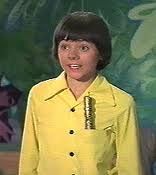
In the opening segment, a cute, androgynous sixteen-year old named Jimmy (Jack Wild, fomerly of Oliver), with a Beatles moptop and a cowboy hat, is prancing through a bucolic mountain countryside, playing with his golden flute (it is not really gold in color but dark bronze, thicker and blockier than real flutes, and extremely phallic later, as it peeps out of Jimmy’s pocket).

 A “kooky old witch” named Witchiepoo (Billie Hayes), passing by on her supersonic Vroom-Broom, spies Jimmy and decides that her drafty old castle could use his youthful vitality – and his ten inches of flute. She instructs a sentient boat to lure Jimmy aboard with the promise of a pleasant journey to Living Island. But when the trip commences, the boat develops arms and claws to hold Jimmy securely in place, while the witch laughs maniacally, and:

The sky grew dark
The sea grew rough
And the boat sailed on and on and on and on


In a scene that is still frightening today, Jimmy manages to free himself from the grasping claws, and dives into the dark, choppy sea. He crawls onto a distant, desolate beach and collapses, half-drowned and exhausted. Then – somewhat too late – help arrives. A tall green-and-yellow dragon named H. R. Pufnstuf resuscitates Jimmy, moves him into his cave, and dresses him in a garish Fab Four outfit (one wonders where the dragon got human clothes. Have there been other Jimmies, lost boys washing up on the beach over and over forever?). Then Pufnstuf introduces Jimmy to the citizens of Living Island, various animals, plants, and inanimate objects, all sentient and wise-cracking, almost all male.

Since Jimmy is well protected, Witchiepoo turns her attention to the flute, now sentient and named Freddy. Most episodes involve Witchiepoo’s grandiose, impractical schemes to steal Freddy, or, when she succeeds, Jimmy and company’s equally grandiose, impractical schemes to retrieve him. Jimmy also mounts a few half-hearted escape attempts, but it is obvious that he has no real desire to leave Living Island. Witchiepoo is more cranky than evil, promising excitement more than threat, and Jimmy is having the time of his life, dancing, singing, putting on plays with a group of caring, attentive friends who tolerate all of his many gender transgressions.

The feature film Pufnstuf appeared in July 1970. In a new back story, Jimmy has recently moved from England to a resort town (Big Bear Lake, California), where he plays the flute in the school band (rather a fairy choice of instrument, I thought). During a practice session on the front lawn of a gaudy, baroque junior high school, the other boys insult him, mock his accent, and finally trip him, and he knocks over some music stands. True to junior high form, the teacher concludes that Jimmy is the troublemaker, and kicks him out of the band. Jimmy runs away, through a town of small brown cabins and autumn-orange trees that, for all its beauty, promises nothing but brutality and viciousness. Eventually he stops by the lake to rest. Suddenly his flute grows longer and thicker, changes from gold to brown, and starts to move of its own accord – an awkward moment for Jimmy to enter puberty!

Witchiepoo happens to be flying overhead, and the plot proceeds as in the series. But now she has a homosocial motive for her designs. She believes that Freddy the Flute will be a perfect trinket to impress the other witches, especially Witch Hazel (Mama Cass Eliot of The Mamas and the Papas), with whom she has a sort of Auntie Mame/Vera Charles rivalry.

All of the many witches we meet in the film are female, and all are aggressively heterosexual. Witchiepoo tries to sneak into Pufnstuf’s cave by flirting with him as vampish dance instructor Benita Bugaloo, and when she telephones Witch Hazel, their conversation consists mostly of gossip about which female witch is dating which man. The film makes Living Island, conversely, a veritable Fire Island, inhabited by ten men (or male beings) and only two women, Pufnstuf’s sister and Judy the Frog (a parody of gay icon Judy Garland).

 None of them is married or involved with the other sex, nor do any of the male residents “boing” with lust over Witchiepoo in her bodacious disguise. It was not unusual for children’s films a generation ago to omit heterosexual content, but quite unusual to place it squarely in the laps of evil witches while infusing the hero and his friends with a blatantly gay sensibility.


Certainly Jimmy’s cherubic cuteness and sexy Cockney accent made the show a must-see for me in 1969, but there is more. The crux of the action is a competition between the female Witchiepoo and the male Pufnstuf over control of Jimmy’s phallus ( Freddy the Flute), and it ends unequivocally in the male camp. Witchiepoo lives in a dark, sinister castle dug-through with dungeons and pits, and Pufnstuf in a gaudy psychedelic Arcadia, with living trees and flowers. Witchiepoo barks out orders to cowering servants, Pufnstuf offers advice to dear friends. Who would disagree that the Dragon is far superior to the Witch?

There's a gay hookup story about Jack Wild on Tales of West Hollywood.

Aug 18, 2021

Run, Buddy, Run: My first crush

There were a few tv programs in the 1960s that I couldn't bear to miss, that I thought were "good beyond hope": That Girl, Maya, Dark Shadows.   Revisiting them after 40 years, it's sometimes hard to figure out why.  But the appeal of Run, Buddy, Run (1966-67) is obvious.

The plot was ok: mild-mannered nebbish learns a terrible secret about organized crime, and must run from the baddies who want him dead.

But said nebbish, Buddy Overstreet, played by Jack Sheldon, was very cute, hirsute, and muscular, and couldn't keep his clothes on.  In every episode, the writers found some reason show him shirtless or in his underwear.  He's in a steam room, in bed, at the beach. His shirt gets ripped off when he tries to flee. Or there is no reason; he's just shirtless.

Head gangster Mr. D, played by Bruce Gordon, had a passion for shirtless muscle-bear shots also.

This is an extremely rare phenomenon in 1960's sitcoms.  You never saw Donald Hollinger, Darren Stevens, or Major Healey in their underwear.


Jack Sheldon has appeared in some other tv series, including a starring role in The Girl with Something Extra. He was the voice of "The Bill" on Schoolhouse Rock (1975), a bit which has been parodied on both The Simpsons and Family Guy.  But he is primarily a a jazz musician -- trumpeter and vocalist -- who has worked with every great in the business, from Dizzy Gillespie to Lena Horne. He is apparently heterosexual, with a wife and four kids, but he was certainly a gay icon in 1966.

Jan 5, 2021

1970s Saturday Morning Beefcake

During the late 1970s, there was a fad for live-action adventure on Saturday morning tv. Mostly low-budget, sometimes stage-bound, but with lots of cute boys and men for the preteen set.  Occasional shirtless shots and some buddy bonding.  In the fall of 1977, for instance:

At 8:00: Space Academy (1977-78), starring Jonathan Harris of Lost in Space as the headmaster of an academy for kids with paranormal powers.  The main hunk was second-in-command Chris (Ric Carrott, seen here in a later softcore porn flick).  But there was also the super-intelligent Paul (Ty Henderson), the super-strong Tee Gar (Brian Tochi), and their mascot, an orphan boy named Loki (Eric Greene).


At 8:30: Skatebirds (1977-78). A Saturday morning  ripoff of The Banana Splits Adventure Hour, lacking the earlier series’ insightful social commentary or wry wit.  But one of the live action segments, Mystery Island, starred the muscular Stephen Parr , the robot from Lost in Spaceplus their two teen companions, played by Larry Volk and Lynn Marie Johnston.


At 9:00: Kids from C.A.P.E.R. (1976-78), about four teenagers working for the Civilian Authority for the Protection of Everybody: the leader P.T. (Steve Bonino), muscular Bugs (Cosi Costa), gentle Doomsday (Biff Warren, left), and intellectual Doc (John Lansing).  They displayed varying levels of heterosexual interest in the girl of the week, and the blond, muscular Doomsday, none at all.


At 9:30: Search and Rescue (1977-78): the Alpha Team consisted of Dr. Bob Donell (Michael J. Reynolds), Katy (Donann Cavin), Jim (Michael Tough, left), and some specially trained animals


At 10:00: The Red Hand Gang (1977-78), inner city kids who fought crime: leader Frankie (Matthew Laborteaux, center, who would go on to star in Whiz Kids), J.R. (J.R. Miller, right), Lil Bill (Johnn Brogan, second right), and Doc (James Bond III, right).

And there were many other with that I missed.

See also: More Saturday Morning Live Action Beefcake


Oct 29, 2020

Head: More of the Monkees

After their spectacular, media-orchestrated rise to fame in 1966, with a top-rated tv show and several #1 hit songs, the Monkees were on top of the world.

 But not for long. They chafed at their "boy band" restrictions; they wanted be known as serious artists, to move beyond teeny-bopper love songs,  to tackle serious issues. They wanted to be free. Their handlers disapproved.

In the spring of 1968, they wrote and produced a movie, Head.  It premiered with great anticipation; fans thought that it would be a comedic documentary, like the Beatles' Hard Day's Night.

It wasn't.

You say we're manufactured -- to that we all agree.
So make your choice and we'll rejoice in never being free!


It consists of a series of sketches, most about the difference between reality and the manufactured plotlines of their tv series: Davy becomes a boxer; Micky is lost in the desert; they visit a haunted house and the Old West.  They constantly disrupt the stories, changing their lines, dropping character, or just saying "We don't want to do this anymore" and walking off the set.

But every set leads to a new story.

They think they have escaped, and settle down to throw a birthday party for Mike.  But he starts yelling that this is not his apartment, these are actors, not his real friends, it's all a fake.

They escape from a box only to find themselves in a bigger box.

They try to commit suicide, only to find that that, too, isn't real; there is no escape.

The constraint of modern life, the inability to ever be free, is a common thread in 1960s media, and resonated strongly for gay kids growing up in a constant drone of "What girl do you like?  What girl do you like?  What girl do you like?"

We've seen it in Easy Rider and Alice's Restaurantin the Tripods series of dystopian mind-control novels, in Richard Schaal trapped in The Cube; in Number 6 trapped in The Village, even in the Castaways trapped on Gilligan's Island.


Still, this version is worth a look for:
1. The clever "box inside a box" concept
2. The frequent beefcake.  You see more of Micky and Davy than ever before, constant shirtless and semi-nude scenes, and all of the guys gets close-ups of their very, very tight pants.
3. The homoerotic buddy bonding that shines through, in spite of the frequent girl-kissing.  These guys are into guys.


In a way, Head represented the suicide of the group.  Teen fans hated it, and the psychedelic generation stayed away.  Their tv series was cancelled, and their songs stopped charting.

But, 50 years later, the memory remains.

Head is streaming on Amazon Prime.

Apr 25, 2020

The Prisoner: We Want Information

When I was a little kid, we had only 3 stations, but sometime in the early 1970s, we got PBS -- the Public Broadcasting System -- and with it, a British invasion.  Suddenly I could see Doctor Who, The Hitchhiker's Guide to the GalaxyMonty Python's Flying Circus, The Tomorrow People, and even fluffy comedies like Father Dear Father and No, Honestly.  I guess they figured that anything British was bound to be educational. They were certainly easier to find subtexts in.

Take The Prisoner, which appeared in Britain in 1966-67, and on PBS in the mid-1970s.

The plot: a British secret agent (Patrick McGoohan) resigns, angrily, then goes home and packs for a trip.  He is gassed, and awakens in a scenic, well-scrubbed Village, where everyone has a number rather than a name ("You are Number Six.").  The Villagers are mostly kidnapped secret agents, from a variety of countries, more or less brainwashed and docile.


The mysterious Number Two, who is in charge of the Village, wants "information."  Number Six wants to escape, or, failing that, to find out who his keepers are.  But plots soon moved beyond the "Why did you resign?" maguffin to explore questions of conformity and individuality.  In order to live together in a community, we must require certain behaviors and banish others, but at what point does the need for conformity impinge upon the rights of the individual to think and feel what he pleases?

It was heady viewing for teenagers in the 1970s, on the par with Animal Farm and Brave New World.  And it was especially evocative for gay teenagers, who were told, day after day, hour after hour, "You must conform. You must desire the opposite sex, date, have sex, marry."


The gay symbolism made up for a decided lack of beefcake -- handsome Patrick McGoohan never so much as unbuttoned a button, not even to work out.  And a lack of bonding -- though there might be a homoerotic subtext in the cat-and-mouse game played by Number Six and the current Number Two (the Village leader changed in almost every episode).

However, there was one plus: virtually no heterosexual content.  Sometimes Number Six got a girlfriend, or pretended to in order to harass Number Two, but they never kissed.  McGoohan had it written in his contract -- no kissing girls (but not because he was gay; he wanted to stay faithful to his wife).

McGoohan starred in many other movies during the 1970s and 1980s.  He is perhaps most famous for playing King Edward in Braveheart  (1995), and eliciting homophobic audience cheers by pushing his gay son's lover out a window.  Not that I believe McGoohan, who died in 2009, actually condoned throwing gay people out of windows.
Related Posts Plugin for WordPress, Blogger...