Showing posts with label Native American. Show all posts

Sep 15, 2026

Travis Turner: Short Guy Brigade, gay subtexts, cutesy cartoons, Christmas romcoms, and hip-hop. With n*de photos and Drake Bell


Link to the n*de dudes


In Final Destination: Blood Legacy (2025), a 1960s Elevator Operator encourages the soon-to-be-skewered couple to squeeze into his already overcrowded elevator, in a scene reminiscent of the "Room for one more, honey" episode of The Twilight Zone.  Then, when things start crashing, he tries to take everyone down the elevator again -- and ends up splattered. 

Look at this guy! He's shorter than Noah Bromley, who plays the evil Penny-Throwing Kid.  Of course I've got to research him.


He's Travis Turner, born in Oliver, British Columbia, in 1987,  raised in nearby Penticton in the Sylix Okangan Nation, although he doesn't mention being First Nation.  Cody Kearsley, Moose in the Riverdale series, is from Oliver also.  Maybe they knew each other.

After high school Travis painted oil rigs and sold vacuum cleaners, then moved to Vancouver to study film at Langara College.  He received his diploma in 2009.  .


He appeared in a lot of shorts in 2009-2010, such as "Henchin'," "Scars," "Snow Tramp," and "Dream a Little Dream," plus the Vancouver-based  Easter Bunny Bloodbath (2010), as one of the victims of a psycho-killer dressed as the Easter Bunny.  Here he appears in an illustration in the novelization.  There was a novelization?

Travis' first high-profile role was in a 2010 episode of Caprica, the Battlestar Galactica spin-off.  He played Ashok, a resident of a virtual world who briefly interacts with Tamara and Heracles ( Richard Harmon).

According to the IMDB, Travis is best known for Final Destination: Blood Lines (2025).

A 2024 episode of Wild Cards, a Canadian police procedural featuring a "will they or won't they" couple, Max (a lady) and Cole (Giacomo Gianniotti).  They investigate a missing butcher in a small town, and find a murderous cult.  Travis plays Daryl, who doesn't appear in the plot synopsis.

A 2023 episode of Upload, where you can be uploaded to a virtual afterlife when you die (if they get to your body right away).  Focus couple Nora and Nathan (Robbie Ammell) have returned to the real world, look for jobs, and discover that Nathan has a duplicate (apparently you can return to the real world multiple times).  Travis plays Tom, who does not appear in the episode synopsis.


The anime Dead Dead Demons Dededede Destruction (2024): Two high schoolers (a boy and a girl, of course) face an alien invasion.  He voices the English dub of Makato Tainuma, a boy who dresses in girls' clothes.  According to TV Tropes, he denies being gay or trans; he just wants to look cute. 

Some Assembly Required (2014-16), a Nickelodeon teencom starring Kolton Stewart as a teenager who becomes CEO of a toy company, and hires all of his friends. Travis played Aster Vanderburg, the snobbish, snarky, fashion-obsessed head of the Design Department (named after the Gilded Age Mrs. Aster).  He's gay-coded for 45 episodes before queerbaiting viewers with The Girl of His Dreams.


More after the break

Oct 26, 2025

Daniel Boone: a Big Man

Daniel Boone was a man --
He was a big man!

Sounds good so far.  When I was seven or eight years old, I was all for watching tv shows about a man, especially a big man.  Especially a big man who was a "dream come-er true-er."  

But Batman was on the other channel.  No kid in his right mind would pick a cowboy over the Dynamic Duo.  I never saw a single episode of Daniel Boone when it originally aired.

I've seen one since, for research purposes. Not a lot of gay content.  Not a lot of cowboy content, either.


1. Daniel Boone (Fess Parker)  is a family man, with wife and kids.  If you have to be a cowboy, at least hang out with other guys.

2. He has a sidekick anyway, Mingo, one of the least convincing Native Americans on tv, actually played by singer Ed Ames (who, although Jewish, became famous for recording the Chrismas song "Do You Hear What I Hear").

3.  It's not even the Old West.  This is Kentucky during the Revolutionary War.


4. While other cowboys were happily displaying monumental physiques, Fess Parker is kept strictly under wraps.  The only cast member to take his shirt off is Darby Hinton, who plays Daniel's preteen son Israel, and his buddy du jour.

Prior to Daniel, Fess Parker had starred in other Disney productions, notably Davy Crockett, Old Yeller, and The Light in the Forest (ignoring the crush of James Mac Arthur).  Afterwards he retired to run a vineyard and give conservative speeches.

Darby Hinton apparently was the first crush of some gay boys of the Boomer Generation, but he didn't have much of a teen idol career (this photo is from Getty Images, not from a teen magazine).


Post-Daniel, he's best known for the sexploitation Malibu Express (1985), as a Magnum P.I. clone who keeps encountering nude women and swishy gay stereotypes while trying to solve a murder.  At least he looks good semi-nude.

Oct 12, 2025

Cody Kearsley: Metis actor with two gay roles, Moose Mason and a post-Apocalyptic zombie. Plus Cody and another Metis guy n*de


Link to the n*de dudes

Having found success with one Riverdale hunk, I thought I'd check on the others.  How about Cody Kearsley, who played one of Kevin Keller's boyfriends: Moose Mason.


You remember Moose from the comics: stupid and muscular (the two usually went together in the media of the day), and so insanely jealous of his girlfriend Midge that he pulverized any guy who even glanced at her. 

In the kinder, gentler 1990s, he was modified to be less violent, and his "stupidity" was explained as undiagnosed dyslexia.  

On Riverdale, the Moose-Midge relationship is troubled by mutual cheating, Moose with Kevin and Midge with Fangs Fogarty of the Southside Serpents.  After Midge is murdered, Moose dates Kevin for awhile, but is afraid to be outed as bisexual.  Eventually he leaves town, and Kevin moves on to the also-bisexual Fangs before getting dumped for Toni, Cheryl's ex girlfriend, and Moose come back to town...well, basically everyone hooks up with everyone.   It's a soap opera, after all.

Let's go back to Cody Kearsley.


Cody belongs to the Métis people, descendants of First Nations members and French settlers from the early days of European colonization.  There are 587,000 Métis in Canada, and a smaller number in the U.S..  Like many First Nation people, they have a tradition of Two-Spirits, adding 2S to LGBTQ and celebrating Gay Pride.

There are three Métis languages, with only a few thousand native speakers but many more learning them to embrace their cultural heritage.  Cody is learning Heritage Michif, spoken primarily in southern Saskatchewan, Manitoba, Montana, and North Dakota.  It is a French-Cree hybrid, with some vocabulary from English and Western Ojibwa.


Can you see the French origin of the days of the week? (Hint: lundi, mardi, mercredi, jeudi, vendredi, samedi, dimanche)

Cody actually grew up in Oliver, British Columbia, in the Sylix Okangan Nation that comprises seven communities on the Canadian-U.S. border.  He attended the Southern Okangan Secondary School, then moved to Vancouver to complete his senior year.

He was active in community and school theater, starring as Bobby Child in Crazy for You and Danny Zuko in Grease.

More after the break

Sep 19, 2023

The Comic Book Jungle

When I was a kid, in the 1960s, I didn't care much for DC and Marvel comics. Whenever I picked up an issue, it turned out to be the middle of a story that would go on for months, with installments in three or four different titles.

Gold Key Comics were a godsend, with stories that concluded in one issue. They offered Disney's Donald Duck traveling to Tibet or the Amazon, Bugs Bunny and Porky Pig as Indiana Jones-style adventure archaeologists, and even more jungle beefcake than DC and Marvel.  (I also liked Harveys and Archies, but not Charlton).


1. Tarzan.  This was the Edgar Rice Burroughs version, articulate, wealthy, and retired from vine-swinging on a jungle plantation – and, when the television series began in 1966, illustrated by pin-up quality pictures of Ron Ely. Jane was usually absent; instead, Tarzan spends most of his time bonding with various noble Africans and extremely chummy white explorers. The testosterone-laced atmosphere is embued with a surprising degree of tenderness: In “Message in the Snows,” Tarzan and two explorers named George and Alec are captured by giant Autralopitheci. George is wounded. Cradling him lovingly in his arms, Alec cries “Oh, please don’t die! Not now – not yet!”

2. The back-of-the-comic, The Jungle Twins, which spun off into its own title in 1972, introduced the identical cousins, both with amazing physiques and a dislike for clothing. On an extended visit with Uncle Tarzan, they adopt a golden lion and use it to rescue a girl from a savage human sacrifice. She asks suggestively“How can I ever thank you?,” but they skip the kiss. “Don’t thank us! Thank. . .the golden lion.”


3. Korak, Son of Tarzan: not the Boy of the MGM movies, a curly-haired muscleman in leopard-skin Speedos.  He is not interested in girls, though he has a heterosexist back story, and spends a lot of time orchestrating heterosexual romances for others. For instance, in “Valley of the Monsters,” he saves an attractive young urban African named Muhammed Isolo (“graduate of Oxford University”) and helps him “go native,” strip to a loincloth and marry a native girl.

4. His back-of-the-comic feature, Brothers of the Spear, also spun off into its own title in 1972. They are the white Dan-El and the black Natonga, co-rulers of the lost kingdom of Aba-Zulu. They happen to have wives, but their administrative duties and marriages never take front-stage to the joy of stripping down to a loincloth and spending some quality time in the bush. 


5. Turok Son of Stone had the most interesting premise of the lot: two Stone Age Indians, the young Turok and the middle-aged Andar, are trapped in a lost world full of dinosaurs and savages. Both have magnificent physiques, of course, and they spend their stories trying to get home and rescuing each other from monsters, with no girl in sight..

Hours of beefcake and bonding for 12 cents apiece-- well in the early 1970s, 20 cents, then 30, 40, and 50 in quick succession, until the company finally folded in 1982.

Aug 13, 2023

Prince Valiant

During the 1960s, the Rock Island Argus printed mostly depressing 50-year old comic strips with jokes about husbands hating their wives or friends betraying each other, with little bonding (Out Our Way was an exception) and very little beefcake. Alley Oop and Prince Valiant were exceptions -- 50 years old, but muscle-heavy.

Prince Valiant was a color strip that appeared only on weekends.  Like Gasoline Alley, it featured characters aging in real life, but it was unique in having no speech balloons; text appeared at the bottom of each panel, making the strip seem more like an illustrated novel than a comic.


When it first appeared in 1938, Val was a young prince from Thule (modern day Norway) who traveled to Britain to become one of King Arthur's knights. Later he returned to Thule to help his father regain his throne, then traveled across Europe and Asia, fighting Goths and Huns, visiting the Holy Land (long before the Crusades).  By the 1960s, the middle-aged Val had settled in North America.

Generally Medieval fantasies (and real epics like The Song of Roland) offer little beefcake; knights wear shining armor, and their northern climate doesn't permit much skinny-dipping.


Sigfried in The Nibelungenlied gets naked, and Sir George in The Magic Sword (1962),  and Lancelot (Nicholas Clay) in Excalibur (1981) take their shirts off, and that's about it.  But in Prince Valiant,  Val was shirtless more often than not.  His muscular physique was drawn in full color and in loving detail.


Unfortunately, through the 1960s, Val retained a 1930s page boy haircut, red lips, rosy cheeks, and long lashes, giving him a rather feminine appearance that didn't lend itself to romantic fantasies.  The name "Val" didn't help much.

And there was little buddy-bonding.  During the 1930s, Val sparred with rival prince Arn of Ord, but they became little more than grudging friends.  In fact, the main plotlines involved the fade out kiss.  First Val and Arn competed for the hand of the fair maid Ilene.  Then she died in a shipwreck, Arn was dropped from the strip, and Val turned his attentions to the fair maid Aleta.

They married, and in 1947 their son Arn was born (the first European baby born in North America).   Eventually they had three more children. When I started reading the strip in the 1960s, Arn was a mischievous teenager, but soon he, too, married.

 Hal Foster, the original cartoonist, also drew Tarzan for many years.   He died in 1982, but the strip is still going strong.


Nov 22, 2022

10 Reasons Why Thanksgiving is the Gayest Holiday


If you're not from the U.S. you might not be familiar with Thanksgiving, a holiday celebrated on the fourth Thursday in November (it's also celebrated on different dates in Canada, Liberia, and Grenada).

It's my favorite holiday.  And the gayest:

1. It's in November, so it's cold outside, and dark at night like it's supposed to be.  No one is forcing you to go out and "enjoy the outdoors."

2. There are no tv commercials depicting heterosexual couples giving each other gifts or watching in rapt joy as their children unwrap gifts.

3. There's no religious significance, so you won't feel guilty if you accidentally say "Happy Thanksgiving!" to someone who is Jewish, Muslim, Buddhist, Wiccan, or atheist.  Although sometimes vegans will lecture you.


4. Gay men spend many extra hours at the gym in anticipation of over-indulging on Thanksgiving.  As a result, at Thanksgiving they're more buffed than at any other time of the year.

5. Everyone gets to demonstrate their culinary skill.


6. You only get Thursday and maybe Friday off work, so there's no time to take a plane ride 2000 miles to the place you grew up.  Thus, "home" is no longer in the past, it's the place you are today, and "family" is what you make of it.

This Advocate cover shows Howard Cruse's character Wendel being served Thanksgiving dinner in bed.  But why is the kid wearing a mask?  Is he the famous Thanksgiving character, Zorro?

7. If you do go home to visit extended family, Thanksgiving dinner is the traditional time for making Big Announcements, like "Guess what?  I'm gay."

8. Most of the bars, clubs, and bathhouses have special Thanksgiving Day events, so you don't have to waste all Thanksgiving afternoon watching football.


9. The origin story, about 17th century Pilgrims and Indians coming together to share a meal, is an imperialist myth, masking a history of conquest and genocide.  But it does lend itself to some interesting ideas for homoerotic revisions (picture from Crow821 on deviantart.com).

10. Gay people have a lot to be thankful for.  They grew up in a culture where they told, over and over, that "discovering the opposite sex" was inevitable and universal, that no gay people existed except for grotesque monsters.  And they survived.


Sep 20, 2021

"Reservation Dogs": Queer, Nonbinary, Quirky Delinquents on the Rez


Someone recommended Reservation Dogs, on Hulu.  I doiubt that there will be any gay characters, but I wouldn't mind seeing some Native American beefcake.

Scene 1: In Indian Country, Oklahoma, some Native  teenagers steal a truck hauling Flaming Flamers Potato Chip (flaming flamers? Gay reference?).  They drive it to a salvage yard overrun by "meth head zombies."  Kenny is waiting for them.  The leader  and a girl discuss what to do if things go bad: "I'll kick him in the nuts, and you grab anything nearby and throw it at him."


While Bear (D'Pharaoh Woon A Tai, left), Willie Jack, and Elora negotiate the payment for the truck heist (and ask to keep the chips), the remaining boy, Cheese (Lane Factor), introduces himself to a meth head, and gives his pronouns.

Scene 2: Carrying big boxes of chips.  Later, in class, Bear shows a video he made introducing the gang and their delinquent activity.  The teacher nervously cuts him off.

Scene 3: They're selling the bags of potato chips at 50 cents each.  Various colorful characters drop by.  A gang of three is watching them from across the street.  They decide to alert Whtie Dave.

Scene 4: Bear sneaks some of the money they made into his mother's purse (aww, the delinquent is helping out).  Mom is going out to night to find him a new Dad, someone better than that "low-down out-of-work Indian rapper." (Foreshadowing?)


Scene 5:
Back at the chip stand.  The tribal cop Big (Zahn McClarnon, left) drives up to interrogate them: "A chip truck was stolen earlier today, and last week we had two cars stolen, and someone pulled the copper out of 20 street lamps and stole the steaks from Patterson's Grocery."  

Flashback to Bear's gang doing all that, plus stealing marijuana edibles and spray-painting pictures of penises and boobs.  Very busy gang!  

There's also been a sighting of Deer Lady, a spirit of some sort.

Scene 6:  On their way to eat some catfish. Uh-oh, the gang from Scene 3 drives up and shoots then all!

While "dead," Bear has a vision: An old-style Indian warrior rides up.  "You've had a taste of the white man's lead."  "It's just paintball." 

 Turns out that he's no one famous, just an "unknown warrior" who fought at the Battle of Little Big Horn.  Well, actually, he didn't fight, he got squashed by his horse.   Anyway, he has a message: "You and your thug-ass friends aren't helping our community.  Find something to fight for."


Scene 7:
  They recover from the paintball attack.  Two rappers, Mose and Mekko (Lil Mike, Funny Bone), approach to tell them that it's a new gang run by a girl named Jackie.  They heard that Bear's gang ruled the rez, so they plan to take them out.

Scene 8: Rob n Cleo's Market to get the catfish.  Uh-oh, Miles, whom they stole the truck from, comes in.  They overhear him complaining about being fired.  Then his wife left hm, and took all the money, so he's bankrupt, so he had to eat sugar, and now he has diabetes.  That's a lot to happen since this morning.

Scene 9: Back at the hideout, Bear feels guilty, and wants to give the money back.  "Fuck that shit.  We got that money fair and square."  They argue.  They talk about Daniel, who died last year.  "This place killed him!  I'm not letting it kill me!" Elora storms out.


Scene 10:
Elora looking at a picture of Daniel (Dalton Cramer, left).  Meanwhile, Bear is on the way home, when he sees Daniel watching him.  

Scene 11: Morning.  Elora stops by with meat pies.  She's ok with buying the truck back from the meth heads and returning it to Miles.  

Scene 12: At the chop shop.  The truck has been stripped, but the meth heads give them what's left of it.  Not much.

Scene 13:  Daniel's memorial service.  The gang in suits, rubbing smoke on their faces.  They hug and say "Love you, bitch."

Jackie's gang drives by and threatens them again.  The end.

Beefcake:  Bear climbs out of bed in his underwear.  Daniel is rather attractive, but as a ghost he won't appear much.

Heterosexism: No one expresses any heterosexual interest, at least not in the first episode.

Gay Characters:  Apparently Willie Jack is nonbinary, and Devery Jacob, the actress playing Elora, is queer. 

D'Pharaoh doesn't reveal much about his personal life.  We know only that he's from Toronto, he's proud of his indigenous roots, and he's a fashion maven.  Maybe he's gay, too.


Aug 25, 2021

The Lone Ranger and Tonto: The First Gay Couple

When I was a kid in the 1960s, we were all about astronauts and outer space.  Cowboys were strictly for squares. We had a few cowboy toys, presented by clueless adults, but  we didn't dare bring them out with other kids around, and we would watch a tv Western only if it had science fiction elements, like Wild Wild West.  So, except for a few parodies, we knew nothing about the Lone Ranger and Tonto, the most blatant gay couple of the first generation of Boomers.


First appearing on the radio in 1933, the Lone Ranger was a Texas Ranger (a sort of Wild West police officer) who was ambushed along with his squadron and left for dead.  He was nursed back to health by an Indian named Tonto (apparently his creator, Fran Striker, didn't speak Spanish), and the two of them rode off to right wrongs.

The radio series was immensely popular, and led to an endless series of toys, games, cereal give-aways, comic books, Big-Little Books, movie serials, and feature films.

Boomer kids often heard their parents discussing fond memories of huddling over a radio listening to an announcer intone "Return with us now to those thrilling days of yesteryear!", after which the Lone Ranger would say "Heigh-ho, Silver! Away!"


Did none of them figure out that these were two men living together, never displaying the least interest in women, and one of them said "Heigh-ho"?

The radio series lasted through 1956, but first generation of Boomer kids was most familiar with the tv series (1949-57), starring Clayton Moore and Jay Silverheels.  I've never seen it, but apparently there's no heterosexual interest, and Tonto needs rescuing quite a lot.

Clayton Moore (top photo) was a former circus acrobat who broke into Hollywood in 1937 and starred in many Westerns, detective dramas, and even science fiction before and during The Lone Ranger. Afterwards he didn't do much acting; he didn't want to.  He had already become the idol of kids everywhere.  Apparently he was not aware of the gay subtext.


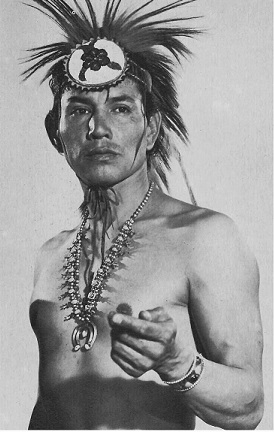
Jay Silverheels (born Harold J. Smith) was a Canadian Mohawk Indian, who got his start in movies as a stuntman.  He, too, had a long career before The Lone Ranger, playing mostly characters named Black Buffalo, Yellow Hawk, and Spotted Bear. Afterwards he continued to work, playing Indians in Laramie, Branded, Daniel Boone, Gentle Ben, and The Brady Bunch, and a non-Indian on Love American Style.  Apparently he was not aware of the gay subtext, either.

But lots of gay kids were aware.  In The Best Little Boy in the World, a classic gay Boomer autobiography, John Reid states that he first figured "it" out through his fantasies of the Lone Ranger and Tonto riding into the sunset together.

The 2013 re-invention starring Johnny Depp and Armie Hammer effectively heterosexualized both characters.

Jan 18, 2021

Annie Get Your Gun: Beefcake and a Gay Couple

I have mixed feelings about Annie Get Your Gun, the 1946 musical that was made into a half dozen movies, revived a dozen times, and remains a favorite of high school and college drama clubs.  Maybe because I got confused, thinking it was about a guy with his arms and legs blown off (that's Johnny Got His Gun).  

It's actually about real-life sharpshooter Annie Oakley (1860-1926), who joins Buffalo Bill's traveling Wild West Show in the 1880s and competes with the star, Frank Butler.

There's something to be said for a big, tough, rastlin' backwoods gal who can shoot guns, but why make her so all-fired eager to give it all up for a man?

I'm quick on the trigger with targets not much bigger than a pin point, I'm number one.
But my score with a feller is lower than a cellar- Oh you can't get a man with a gun.

Wait -- I know the answer.  Heteronormativity.

But she goes even farther, proclaiming it as universal human experience, "doin' what comes naturally":

My tiny baby brother, who's never read a book, knows one sex from the other --
All he had to do was look!

And the object of her affection is rather a cad, leaving a chain of seductions wherever he goes:

There's a girl in Tennessee who's sorry she met up with me
I can't go back to Tennessee -- I'm a bad, bad man!

The kicker: Annie is a better shot than Frank, but in the big match, she deliberately loses, so he will like her.  What kind of message is that for young heterosexual girls?  Squash your talents in order to get a man!


But some the songs are catchy, especially the show-stopping "There's No Business Like Show Business," which became the unofficial anthem of Hollywood.

There is a small gay subtext in the relationship between Buffalo Bill and his manager, Charlie Davenport.


And some beefcake: Annie is mentored by Indian performer Sitting Bull, who adopts her into his tribe.  Costumer designers often decide that the Indians should display their physiques.


Besides, Annie has been played by some of the biggest gay icons of the stage, including Betty Hutton, Ethel Merman, Judy Garland (actually fired from the 1950 film), Bernadette Peters, and Doris Day.

Notable Franks have included Bruce Yarnell, John Raitt, Harve Presnell, Tom Wopat, and Patrick Cassidy,

See also: The Sound of Music; The Pajama Game.

Sep 7, 2018

Burt Reynolds Naked on a Bear Skin Rug


The most famous male nude photos in history:
1. Johnny Crawford's full-frontal nude shot advertising The Naked Ape (1973).
2. Burt Reynolds's nude centerfold in the April 1972 issue of Cosmopolitan


The 36-year old actor specialized in serious dramatic roles, mostly Westerns about surly, downtrodden Native Americans (Navajo Joe, 100 Rifles, Sam Whiskey).  He had just finished filming Deliverance (1972), about four big-city businesmen who go camping in rural Appalachia, and encounter slack-jawed, gap-toothed hillbilly savages.  He expected it to get him a best-actor Oscar and acclaim as a serious actor.

Then Cosmo editor Helen Gurley Brown approached Paul Newman about doing a nude centerfold.  He refused, so she approached Burt.

Burt lay supine on a bearskin rug in a parody of the popular baby photos, grinning mischievously, coyly hiding his sex organs.  It was not an erotic photo.

But it was groundbreaking.  Nude male photography was still in its infancy -- only a few years ago, it was judged de facto obscene.  This was the first time that any man had ever appeared nude in a mainstream publication.

It was a victory for women's liberation.  Helen Gurley Brown reminisced: "Men liked to look at women naked.  Nobody talked about it, but women liked to look at men naked."  A few months later, Douglas Lambert was inspired by the photo to launch Playgirl magazine, featuring pictures of naked men: "It came to me -- that's what women want."

Both of them were disgustingly heterosexist, trying their best to pretend that they were unaware that  some men like to look at men naked, too.   But men were watching.  Burt Reynolds became a gay icon without ever playing a gay character.

The photo made Burt a celebrity, but kept him from being taken seriously as an actor.  Deliverance was snubbed at the Oscars, and he spent the 1970s in Southern-Redneck comedies like White Lightning (1973), Hooper (1978), The Best Little Whorehouse in Texas (1982), and the Smokey and the Bandit series (1977, 1980, 1983), often with his bff Bert Convy.

It has been recreated by  many other celebrities, including Neil Patrick Harris and Mario Lopez.

See also: Bert Convy: Spending the 1970s Nude

Jul 6, 2018

Scott Grimes: a Band of Brothers


For a few years in the mid-1980s, Scott Grimes was as famous as Scott Baio or Matthew Broderick.

His red hair and boyish smile drew the interest of teen magazines, and his muscles and penchant for nudity made him a fave rave for many gay teens.


Not to mention his cool fashion sense and hard-to-miss bulges.

His body of work is comparatively small, but wide-ranging, from the pedestrian to the masterful to the ridiculous.

The pedestrian: guest spots on all of the standard tv programs of the 1980s, including Charles in Charge, Who's the Boss, My Two Dads, Wings, and 21 Jump Street.  Starring roles in several series, including Goode Behavior, Party of Five, E.R., and American Dad (his current gig, voicing the teenage son Steve Smith).

The masterful:  the miniseries Band of Brothers (2001), about an infantry division during World War II who learn heroism, courage, devotion, and love.  Scott played Technical Sergeant Donald Malarkey, who is deeply affected by the bloodshed around him, and is always looking for someone to love.

In Dreamkeeper (2003), the Lakota Sioux elder Peter Chasing Horse tells his sullen, "modern" grandson, Shane (Eddie Spears), stories about their culture as they travel to a pow wow in Albuquerque.  A Red-Headed Stranger (Scott) joins them.  As the Stranger and Shane grapple with their unstated but strongly articulated homoerotic desire, Grandfather tells them the store of Tehan, a white man who joined the Kiowa. He, too, felt an unstated homoerotic desire.

Even Scott's ridiculous projects have some gay content.

 In the Gremlins clone Critters (1986), an an army of small, round, squish monsters, sort of like tribbles with teeth, eat their way through a small town.  Brad (Scott) combats them, along with two intergalactic bounty hunters. One morphs into an androgynous glam-rocker named Johnny Steele (Terence Mann), who draws the interest of both Scott and town drunk Charlie (Don Opper).  At the end of the movie, Charlie asks for and receives an intergalactic bounty-hunting job, and the three zap off into space together.


In Critters 2 (1988), Brad is still at work stamping out critters, and the three bounty hunters return to Earth. His coworker dies in combat, and Johnny, grief-stricken, "destabilizes" (has an alien nervous breakdown).  Charlie keeps his arm around him, comforting him, saying “I can’t go on without you."  They embrace.  The music swells.  They have found true love.

Scott is also a talented singer, with three albums to his credit: Scott Grimes (1989), Livin' on the Run (2005), and Drive (2010).  His songs are moody and dark, mostly about lost loves and growing old, but most do not specify the gender of his love, making them resonate with both heterosexual and gay audiences.
He is a gay ally, and often contributes to pro-gay causes.


Oct 14, 2017

Bobby and Johnny Crawford

Many Boomer kids aren't aware that Johnny Crawford, the 1950s teen idol, star of The Mickey Mouse Club and The Rifleman, the bodybuilder with full nude scenes in The Naked Ape, had a older and even more muscular brother, Bobby Crawford or Robert Crawford Jr.

Born in 1946, Bobby starred with Johnny on three episodes of The Rifleman, and in Indian Paint (1965),  where the two play Native Americans.  They get many semi-nude shots and, as a bonus, develop a quasi-romantic physical intimacy.


TV and movie magazines love brother acts, and soon Bobby and Johnny were being photographed together, often framing them as if they were a romantic couple.  They released several albums together, including one entitled Pals. 

But Bobby also had a solo career, with guest spots on The Donna Reed Show and Whirlybirds, and a recurring role on Zorro.  

He was nominated for an Emmy for his performance on Child of Our Time, a 1959 episode of Playhouse 90, about a young boy searching for a home in 1930s France.


He starred in the Western Laramie (1959-60), about two brothers who run a stagecoach stop in the Wyoming Territory.  His character idolizes the hunky drifter Jess Harper (Robert Fuller), and soon the two actors were seen out together in real life, "two bachelors" hitting the Hollywood hotspots.


Later in the 1960s, Bobby played an oddball outsider on Kraft Suspense Theater, a World War II French resistance figher on Combat, and a young man who idolizes his outlaw brother on Gunsmoke.  His last small-screen appearances were on My Three Sons in 1968.

Moving behind the scenes, he produced The Sting (1973), The World According to Garp (1982), The Little Drummer Girl (1984), and other movies.
Related Posts Plugin for WordPress, Blogger...