Mar 11, 2023

The Top 10 Dour Hunks of "The Last of Us"


If you're watching several post-Apocalyptic tv shows at the same time, it becomes difficult to remember which pandemic just killed almost everyone (Station Eleven), which resulted in a world full of plodding, snarling zombies (The Walking Dead), and which resulted in vampire-like beings (The Strain).  Then there's The Last of Us on HBO, where mutated fungus in flour-based products results in near-instantaneous transformation into a creature covered with nauseating bulbous tumors. 

 I'm still watching, but every time a bulbous monster appears, I keep my eyes closed, or scroll through the social media on my cell phone.  As a result, I'm not entirely sure what's going on, so don't yell at me if I get something wrong.  These are just my impressions.  But I did notice some beefcake.

1. Construction worker Joel (Pedro Pascal, top photo) lost his daughter on the first night of the Apocalypse (she is presented as the protagonist, just to mess with viewers' heads). Twenty years later, he is living in Boston, a horrifying dystopia much worse than anything conjured up on The Walking Dead, a police state where they have public executions of anyone who breaks any of the hundreds of repressive laws.  Hardened and dour, he is working as a smuggler along with his non-romantic business partner Tess. 


2. Joel's screw-up younger brother Tommy (Gabriel Luna) also survived, but the two are estranged because Tommy went over to the Dark Side or something.

Joel and Tess are hired to deliver sassy 14-year old Ellie to a location I can't remember.  She's special because she's the first person in history to be immune to the fungus, so her blood can be used to make a vaccine.  

On the way out of decrepit, decayed Boston, partner Tess is inundated by disgusting bulbous monsters.  Then it's just the two, trudging through the pristine forests that are just outside the city.  Wait -- outside of Boston there are miles and miles of suburbs.  They stop in various places for supplies and fight the disgusting bulbous monsters.


3. For a reason I'm not clear on, they have to stop by Bill and Frank's -- a gay bear couple (Nick Offerman, left, Murray Bartlett, below) who live in a very nice house with hot water and electricity, pair rabbit stew with Beaujolais, and play Linda Ronstadt songs on the piano. 


4,  In Episode 3, we see their 20 year relationship from beginning to end.  Bill, a survivalist, was hiding in an underground bunker when the military rounded up everyone else in town to kill (to prevent infection?).  He lived alone for several years, until Frank showed up.  He had never been romantic with anyone before, but apparently his only human contact in years sparked some interest.  

I like the scene where they are preparing for sex for the first time: Bill takes his towel off, and Frank's eyes bug out -- apparently the bear is quite well-hung.  I don't like them both being isolated, interacting with no humans other than Joel and Tess, and being dead.


5. Next, in Missouri for some reason, Joel and Ellie encounter dour revolutionary Kathleen and her dour nonromantic partner Perry (Jeffrey Pierce).


6. The revolutionaries want to find and kill hardened bandit Henry (Lamar Johnson) and his deaf, sick, autistic brother Sam (how vulnerable can you get?).  But Joel and Ellie bond with the two.  They fight disgusting bulbous monsters together.  But Sam is bitten!   You know this won't end well.


7.  This doesn't technically count, but in the video game version of The Last of Us, deaf, sick, autistic Sam is a teenager, played by Nadji Jeter.


8. Joel and Ellie finally reunite with Joel's younger brother Tommy (was that the game plan?), who is living in Jackson, Wyoming with his pregnant wife.  But they argue, and the two leave. 

 In Colorado for some reason, Joel is severely injured.  And guess what: in Episode 7, the teenage Ellie is revealed to be a lesbian!  She had a girlfriend back in whatever horrible dystopian place she was living in before Boston, but the girl got monster-ized.

While Joel is fighting his life-threatening injury, Ellie encounters dour cult leader David  (Scott Shepherd) and his nonromantic partner James, who threaten and traumatize her in various ways before she kills them.  


9. I spend most of each episode desperately trying to avoid looking at the disgusting bulbous monsters on the screen, but I got a brief glimpse of Philip Prajoux (right), playing one who infects Joel's nonromantic partner Tess by exuding tentacles into her mouth.


10. Riley Davis (bottom) reputedly plays a "Young Firefly Soldier" (Fireflies are terrorists or freedom fighters, depending on which side you are on), whom Joel provides with drugs in Episode 2.  

I'm including him without a shirtless photo because I spent ten minutes paging through references to a woman named Riley Davis on the old McGyver tv series and looking at the instagrams of 12 people named Riley Davis, all women.  This actor has four citations on the IMDB, but not The Last of Us or Lions in Waiting, which is the source of this photo.

Oh, well.  The last episode of The Last of Us airs on March 12th.

Mar 5, 2023

"The White Lotus": A Shockingly Homophobic Portrayal of a Gay Man, Created, Written, and Directed by the Devil


I lived in Florida for four years, and never went near the beach.  You'll never get me on a boat.  Even going over a bridge pushes up my anxiety level.  So I wasn't sure about the HBO Max series White Lotus, set in a beach resort in Italy.  But someone told me that there were gay characters in Season 2, so here goes....

Scene 1: A beach resort featuring bikini models sitting under umbrellas.  A woman with her breasts hanging out of her swimsuit starts a conversation with two women who just arrived from America.  She's leaving in a few hours, but she praises the hotel, the staff, the food, and the wine.  So she spent her entire trip on a beach that looks like every beach everywhere?  Why not try to actually see the country?  Her semi-bare butt goes into the water for one last swim -- and she bumps into a dead body!

Cut to hotel staff Rocco and Valencia watching body bags being hauled away.  Several bodies of guests have turned up!


Scene 2: 
 A week earlier.  Two heterosexual couples on a boat, one distant and arguing, the other snuggling, kissing, and nose-rubbing.  Then a depressed woman, Allora, walking through town.  Her friend Mia asks what's wrong: "Massimo has a new girlfriend, and I'm jealous."  Mia drags her away: it's almost time for the boat to arrive.  So is this a flashback in a flashback, before the girls get on the boat with the heterosexual couples?

A boat arriving while the staff waves.  "Smiles, everyone, smiles!'   Allora and Mia look on from afar, wondering which one "he" is.  He who?  A new boyfriend met on Tinder?


Down on the dock, Employee Valencia tells the Old Guy: "I'm surprised you are here.  It's a long way from L.A., and you are quite old."  Way to insult your guests!  Next an unidentified older-younger same-sex couple; Cameron (Theo James, above) and wife, the kissing, nose-rubbing couple); Ethan (Will Sharpe, left) and wife, the distant, arguing couple (he forces her to drink wine); and a flowsy rich lady with a hundred suitcases, Ms. McQuaid. "I am your host, Mr. Roarke.  Welcome to Fantasy Island." 

Scene 3:  The White Lotus resort is in an  old hilltop convent, nowhere near the beach -- but with a view of Mount Etna. What kind of beachside resort is this, where you have to take a bus to get to the beach?

  Employee Rocco tells the two couples, who are apparently all friends, the story of the testi morti: a Moor came to Sicily and seduced a local woman.  When she discovered that he had a wife and kids back home, she cut off his head. It's a warning for husbands not to cheat. 

Then he shows  them that the two rooms connect through a secret doorway.  Ethan is up for wife-swapping, but his wife disapproves: "We won't be using that."   When the kissing, nose-rubbing couple leave, Ethan starts yelling at her.  Jerk! Not into it means not into it.


Meanwhile, the older-younger same-sex couple turn out to be father Dominic and young adult son Albie (Adam DiMarco), traveling with Grandpa Bert, who flirts with a female employee until the others reigns them in.  They're here to visit their ancestral town. 

So far the only potentially gay guest is Albie, so I'll fast-forward to his story.

Minute 24: Albie gets out of the pool (nice chest shot, but every other guy in the vicinity is fully clothed0.  He sits down next to Portia, a teenage girl who just got off the phone with a friend telling her to "get some dicks" while on vacation.  SHe starts crying because "they" have half a billion dollars but won't let her have any fun.  Albie consoles her.


Minute 46:
They kiss.  Ok, so Albie is straight.  All of the other guests are married, hetero-horny, or both.  Who is the gay one?

Research reveals that he is Quentin, one of those aristocratic, decadent, fey Quentin Crisp types (parents don't know that their kid is gay when he is born, so why do gay guys on tv always have tired stereotype names, like Quentin and Blaine?).  This closeted jerk pays a group of straight men to have sex with him and introduces them as "my nephew and his friends."   He's also a drug addict and a murderer.  Pure homophobic sleaze.  

Wait -- I didn't notice before, but this series is created by, written by, and directed by MIKE WHITE, aka The Devil,  the most disgusting homophobe in Hollywood.  This is the jerk who wrote and starred in Chuck and Buck, about gay relationships being only for adolescents experimenting on their way to a "normal" heterosexual adulthood -- then had the monumental gall to advertise it in gay magazines!  Apparently those poor souls who get stuck in their adolescent "gay phase" turn into decadent, fey drug addicted murderers.


Run away. Run away fast.  

Feb 21, 2023

Sad Sack

When I was a kid, I loved Harvey comics' supernatural titles, Casper, Spooky, and Hot Stuff having science-fiction and espionage adventures in the Enchanted Forest.  In a pinch, I didn't mind the kids-with-crazy-obsession titles, Little Dot, Little Lotta, and Richie Rich.  But I never even picked up Sad Sack.  

Military humor -- gross!  It was the middle of the Vietnam War.  Our fathers and older brothers were dying in Vietnam, or burning their draft cards and going into exile in Canada.  Who wanted to be reminded of all that?

But recently I came across an old book, The Sad Sack.  Apparently the character existed before Harvey Comics, in a pantomime strip published by Sergeant George Baker in the military magazine Yank during World War II.  The Sad Sack (short for "Sad Sack of Sh*) was a classic schmiel, beset-upon by bad luck, but tough, masculine, and sexually active (although here he's paying a woman to iron his pants).


Two hardcover compilations of Sad Sack strips appeared in 1944 and 1946.  There was a radio series (1946) starring Herb Vigran and a movie adaption (1957) starring Jerry Lewis.

Harvey took over the franchise in 1949, giving Sad Sack a voice, a nebbish personality, and surprisingly, a lot of shirtless and semi-nude shots (although he didn't have much of a physique).

 He was now a permanent private at Camp Calamity, so he would never go to war (like Beetle Bailey and Gomer Pyle), and he had a coterie of friends and superior officers, notably Sarge.


Sad Sack and Sarge have a "antagonistic best friend" relationship similar to that of Beetle Bailey and Sgt. Snorkel, with the same homoerotic subtext.


There were many spin-off titles, including Sad Sack's Funny Friends, Sad Sack's Gobs n Gals, Sad Sack and the Sarge, and Sad Sack Laugh Special.  Sounds like Archie spin-offs like Pals n Gals, and Laugh.

I never knew whether Sadie Sack was Sad in drag or just his girlfriend, but she turns out to be his female identical-twin cousin.  Rather a gender bender.


The Sad Sack title continued to be published for over thirty years, ending only when Harvey Comics folded in 1982.   so somebody was interested in Sad's chubby physique and buddy-bonding with the Sarge.

Just not me.


Feb 13, 2023

H. R. Pufnstuf: The Dragon and the Witch Compete over Jimmy's Flute


 I can’t watch H. R. Pufnstuf anymore. The lightning-quick takes, psychedelic colors, lame wise-cracks, and aggressive laugh-track are annoying. But in 1969, when I was 8 years old, I looked forward to it all week.

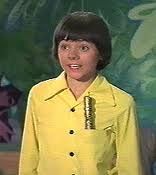
In the opening segment, a cute, androgynous sixteen-year old named Jimmy (Jack Wild, fomerly of Oliver), with a Beatles moptop and a cowboy hat, is prancing through a bucolic mountain countryside, playing with his golden flute (it is not really gold in color but dark bronze, thicker and blockier than real flutes, and extremely phallic later, as it peeps out of Jimmy’s pocket).

 A “kooky old witch” named Witchiepoo (Billie Hayes), passing by on her supersonic Vroom-Broom, spies Jimmy and decides that her drafty old castle could use his youthful vitality – and his ten inches of flute. She instructs a sentient boat to lure Jimmy aboard with the promise of a pleasant journey to Living Island. But when the trip commences, the boat develops arms and claws to hold Jimmy securely in place, while the witch laughs maniacally, and:

The sky grew dark
The sea grew rough
And the boat sailed on and on and on and on


In a scene that is still frightening today, Jimmy manages to free himself from the grasping claws, and dives into the dark, choppy sea. He crawls onto a distant, desolate beach and collapses, half-drowned and exhausted. Then – somewhat too late – help arrives. A tall green-and-yellow dragon named H. R. Pufnstuf resuscitates Jimmy, moves him into his cave, and dresses him in a garish Fab Four outfit (one wonders where the dragon got human clothes. Have there been other Jimmies, lost boys washing up on the beach over and over forever?). Then Pufnstuf introduces Jimmy to the citizens of Living Island, various animals, plants, and inanimate objects, all sentient and wise-cracking, almost all male.

Since Jimmy is well protected, Witchiepoo turns her attention to the flute, now sentient and named Freddy. Most episodes involve Witchiepoo’s grandiose, impractical schemes to steal Freddy, or, when she succeeds, Jimmy and company’s equally grandiose, impractical schemes to retrieve him. Jimmy also mounts a few half-hearted escape attempts, but it is obvious that he has no real desire to leave Living Island. Witchiepoo is more cranky than evil, promising excitement more than threat, and Jimmy is having the time of his life, dancing, singing, putting on plays with a group of caring, attentive friends who tolerate all of his many gender transgressions.

The feature film Pufnstuf appeared in July 1970. In a new back story, Jimmy has recently moved from England to a resort town (Big Bear Lake, California), where he plays the flute in the school band (rather a fairy choice of instrument, I thought). During a practice session on the front lawn of a gaudy, baroque junior high school, the other boys insult him, mock his accent, and finally trip him, and he knocks over some music stands. True to junior high form, the teacher concludes that Jimmy is the troublemaker, and kicks him out of the band. Jimmy runs away, through a town of small brown cabins and autumn-orange trees that, for all its beauty, promises nothing but brutality and viciousness. Eventually he stops by the lake to rest. Suddenly his flute grows longer and thicker, changes from gold to brown, and starts to move of its own accord – an awkward moment for Jimmy to enter puberty!

Witchiepoo happens to be flying overhead, and the plot proceeds as in the series. But now she has a homosocial motive for her designs. She believes that Freddy the Flute will be a perfect trinket to impress the other witches, especially Witch Hazel (Mama Cass Eliot of The Mamas and the Papas), with whom she has a sort of Auntie Mame/Vera Charles rivalry.

All of the many witches we meet in the film are female, and all are aggressively heterosexual. Witchiepoo tries to sneak into Pufnstuf’s cave by flirting with him as vampish dance instructor Benita Bugaloo, and when she telephones Witch Hazel, their conversation consists mostly of gossip about which female witch is dating which man. The film makes Living Island, conversely, a veritable Fire Island, inhabited by ten men (or male beings) and only two women, Pufnstuf’s sister and Judy the Frog (a parody of gay icon Judy Garland).

 None of them is married or involved with the other sex, nor do any of the male residents “boing” with lust over Witchiepoo in her bodacious disguise. It was not unusual for children’s films a generation ago to omit heterosexual content, but quite unusual to place it squarely in the laps of evil witches while infusing the hero and his friends with a blatantly gay sensibility.


Certainly Jimmy’s cherubic cuteness and sexy Cockney accent made the show a must-see for me in 1969, but there is more. The crux of the action is a competition between the female Witchiepoo and the male Pufnstuf over control of Jimmy’s phallus ( Freddy the Flute), and it ends unequivocally in the male camp. Witchiepoo lives in a dark, sinister castle dug-through with dungeons and pits, and Pufnstuf in a gaudy psychedelic Arcadia, with living trees and flowers. Witchiepoo barks out orders to cowering servants, Pufnstuf offers advice to dear friends. Who would disagree that the Dragon is far superior to the Witch?

There's a gay hookup story about Jack Wild on Tales of West Hollywood.
Related Posts Plugin for WordPress, Blogger...