Jan 10, 2024

Little Lulu: The Perils of the Gay Child's World

During the 1960s, when Bill, Greg, and I zoomed into Schneider's Drug Store to blow our allowance on comic books, we zeroed in on the Gold Key jungle titles (Tarzan, Korak), Disneys (Donald Duck, Uncle Scrooge), or maybe Bugs Bunny and Porky Pig as swashbuckling adventurers.  I had to go back later to pick up Little Lulu, since my friends would rib me for liking a comic that was "just for girls."

But Little Lulu offered something that no other comic book or tv program or movie of the 1960s had: cute boys running around completely nude. Stylized, cartoon nudity, but still exciting for a preteen who had a vivid enough imagination to fill in the blanks.

I didn't know that I was reading reprints of comics written by John Stanley in the 1950s, and originally based on single-panel strips published in the Saturday Evening Post.  So, like Out Our Way, I was mesmerized by this kid world so different from my own.


1. At Denkmann Elementary School, boy-girl friendships were discouraged, but Lulu Moppet had friends of both sexes: the self-assured Tubby (left); timid Annie and her brother Iggy (right); spoiled rich kid Wilbur; the haughty Gloria.


2. Some of the plots involved Tubby wanting to kiss Gloria or Lulu getting valentines from boys, but not many; mostly boys and girls were completely oblivious to heterosexual desire, a pleasant surcease of the girl-crazy boys on tv during the 1960s.

3. There was little of the gender segregation of my grade school.  Boys had no qualms about appearing in girls' clothing.  Girls excelled at boy-only pursuits.

4. They had remarkable freedom to go wherever they liked without parental supervision.

5. They lived in a urban neighborhood, a short walk from downtown shops that were curiously specialized (meat, vegetables, bread, and candy all in different stores).  There were also woods, a lake, caves, and a swamp nearby; the beach was a short bus ride away.


6. There were many inexplicable dangers.  Spankings, often for things they didn't do.  Truant officers who wouldn't listen to reason. Goblins who stole your identity.  Parental abandonment ("I found a little boy I like better, so you'll have to leave").  A witch who would turn you into a stone or a lead pipe and leave you, immobile and helpless, forever.

These dangers mirrored those of gay kids who tried to negotiate the straight world, following  nonsensical rules, knowing that the slightest slip-up would mean disaster.

Jan 9, 2024

"Unstable": Father and son Lowes grieve over their dead wife/mother, with a gay sycophant and sex parties


The nice thing about Rob Lowe is that everyone in the world has seen him aroused, so there's no mystery.  It changes the dynamic of beefcake-watching when you know exactly what an actor has in his pants.  Still, I haven't watched many of his recent tv shows or movies; even though my friend Mario claimed to have hooked up with him, I had the impression that Mr. Lowe wasn't entirely gay-friendly.  So I went into his 8-episode Netflix sitcom, Unstable, a bit wary.  I reviewed Episode 4, "Pilgrims and Sex Parties," since sex parties are a gay community thing.  

Link to NSFW version

Premise: "Unstable genius" Ellis (Rob), who owns a biotech company, spirals out of control after the death of his wife (red flag!), so he brings his son Jackson (real-life son Johnny Lowe, below) aboard to smooth things out.  Except Jackson is a flautist.  How would that even work?


Scene 1
: The biotech company.  A lady in a business suit complains that a photo of Ellis with a hawk on his head has gone viral, creating a meme where he's called the Wizard of Odd.  Ellis doesn't care: he's busy channeling his inner child and monkeys. 

Meanwhile, the obsessive Smithers to Ellis' Mr. Burns, Malcolm (Aaron Branch, left), has a meet-cute with the new HR Guy, but is too flustered about HR regulations to flirt.  A gay character in the first scene!  I stand corrected.

Scene 2: Ana, Ellis's main ally on the board of directors, asks how he's handling the grief over his Dead Wife.  Not well , he says: after losing the most wonderful person in the world, life is meaningless. After four episodes?  Usually Dead Wives are mentioned once to establish that the guy is heterosexual, then dropped.  Is this a show about grief?  

"So," Ana says, changing the subject, "About the hawk-on-your-head story, that reporter screwed you in the ass with a King Kong dick?"   Sounds like a fun date, but I think it's just a homophobic reference to the hawk-on-the-head story.

Scene 3:  Ana the Board Member runs into Ellis's son Jackson, the flautist-biotech scientist, and asks how he's handling the grief over his Dead Mother.  Not well;, he says; the grief comes in waves.   She notes that she's still playing the harp, so why doesn't he stop by with his flute for some "pluck and toots."   That sounds dirty.

Scene 4:  In the lab, scientists Luna and Ruby are looking through microscopes, trying to shame some cells into dividing.  They discuss Luna's never-seen "loser" boyfriend Brian and Ruby's ex-boyfriend - Jackson!  A heterosexual flautist?  How odd!

Sycophant Malcolm comes in all flustered over his meet-cute, so the scientists offer to create a litmus test to determine if HR Guy is actually interested. 

Ellis enters the lab, announcing that he's ready to go back to work: "If we can get some reductive oxidant on the anode..."   Uh-oh, he peers into a microscope and starts crying.  Too soon.  Strange -- usually working helps you deal with the grief.  Maybe the Dead Wife was a scientist.  


Scene 5: 
 Business-Suit Lady approaches the mansion of JT and Chas (JT Parr, Tom Allen, left), who are trying to destroy Ellis.  Boyfriends? No, brothers: they mention their father.  She orders them to back off, or she will post an embarrassing video. 

 "The sex parties?  We don't care -- everybody in tech goes to sex parties."  

No, actually she has a film of the two pretending to be Pilgrims.  If it gets out, no girls will come to their sex parties, so they'll have to have sex with guys.  "Ugh!  Gross!  Ok, we'll back off."  So these are heterosexual sex parties?  I've never heard of such a thing.


Scene 6: 
 Board Member Ana and Jackson playing their harp and flute and discussing how Ellis is still too grief-stricken to work.  She suggests that since father and son are both struggling with grief, they could help each other: "Oh, Dad never wants my help.  He just likes to criticize and patronize me."

Meanwhile, Ellis drinks cocoa with his father or father-figure.  He complains that the lab was always a safe place, but because his Dead Wife worked there, he'll never be able to work again, and the company will tank. 

Father Figure suggests that he overcome his grief with a trip: "To Ibiza, the cradle of civilization!  They invented DJs there!"  Have you ever noticed that if you say a word over and over, it loses its meaning?  That's about to happen on this show, where the word "grief" is used every 10-15 seconds.

Flautist son Jackson enters to try out the "help each other" strategy: He warns Ellis: "But if I try to help you, you can't get all condescending and patronizing, ok?"  His strategy when you're feeling overwhelmed by grief: pinch your butt hard.  The pain will ground you.  That might actually work, but why not pinch your arm?  Why the butt?  Unless you're setting up a joke for later.


Scene 7: Business Suit Lady brags to Ellis about her success in getting the Sex Party-Pilgrim Brothers to back down. Whoops, they're standing in her office!  They want Business Suit Lady to back down, or they'll reveal her "super-cringey fan fiction" about how everyone in the office worships her and gives her credit for everything.

Meanwhile, the scientists have developed a test to determine if HR Guy is into Sycophant Malcolm: put a piece of lint on his shirt.  If HR Guy picks it off, he's interested!

Ellis and Jackson enter the lab, ready to try working again: "I'm excited to try the butt stuff you showed me, Ellis says.    The scientists stare in horror, assuming that he means gay sex. To be fair, they may be more disgusted by the incest than by the gay sex itself.  

Jackson clarifies; "It's not butt stuff in the classic sense."  Ellis sits in front of a microscope, begins talking about oxides, pinches his butt -- and runs sobbing from the lab! It didn't work!

Jackson follows, sorry that the butt-pinching strategy was a bust.  They discuss why, when Dead Wife was everywhere in the building, only the lab causes uncontrollable grief.  Jackson figures it out: the carbon project was important to her, and whenever Ellis goes into the lab, he worries that he'll be immobilized by grief and unable to work, thus disappointing her, and he spirals.  Breakthrough!

Scene 8:  Out in the hallway, Jackson complains to one of the Scientists that he solved Dad's lab-grief problem, but Dad took credit for it.  Harsh!  Suddenly he picks a piece of lint from the Scientist's lab coat -- he's interested!  She rushes into the bathroom to douse herself with water.

The lint-picking strategy worked for Sycophant Malcolm, too: HR Guy invites him to go out for a drink after work.  But when HR Guy complains that Ellis is "difficult," Sycophant Malcolm storms out in a rage.  "Too many red flags!"  So, is the gay sycophant secretly in love with the boss a cliche now?

Scene 9:  Business Suit Lady tells Ellis about her super-cringey fan-fiction, in case the Pilgrim Twins release it. He suggests payback.  Exposing them to smallpox?  No, TP-ing their house.  Except on the way to the house, they accidentally hit one of the twins!  The end.

Beefcake: None, although Jackson and the Pilgrim Twins are nice to look at.

Gay Characters, Malcolm and HR Guy, of course.  In the next episode, they reconnect at a birthday party, but after that HR Guy never appears again.

Homophobia: A few references to how gay sex is disgusting. 

Will I Keep Watching: Probably not.

Bonus Rob Lowe, JT Parr, and Tom Allen bulgesa and butts on RG Beefcake and Boyfriends

Jan 7, 2024

A Wrinkle in Time


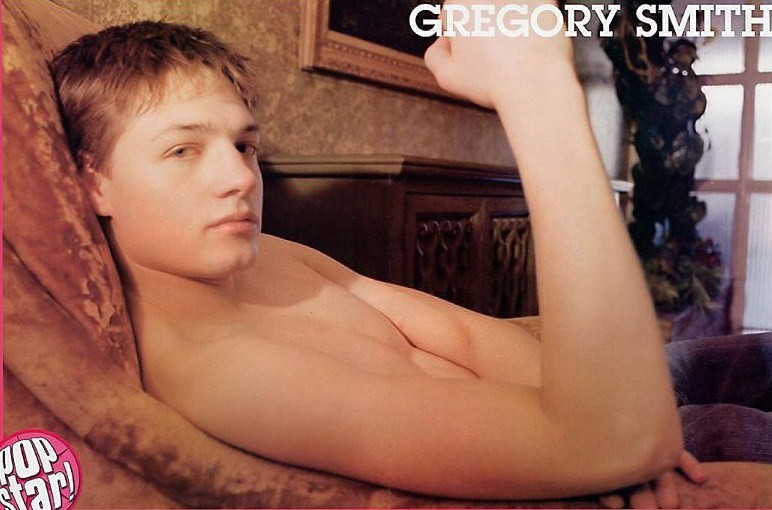
When I read Madeleine L'Engel's A Wrinkle in Time in grade school, I identified with Charles Wallace Murry, a shy, intelligent boy who  sees things other kids can't.  He seems to have a crush on misunderstood high schooler Calvin (played by David Dorfman and Gregory Smith in the 2003 movie).


Charles Wallace, his older sister Meg, and Calvin are drawn into a cosmic battle against the Black Thing, which is devouring entire solar systems and transforming them into suburbs, "houses made of ticky tacky, and they all look just the same."

The Black Thing brings conventionality, constraint, and heterosexism.  I found it a powerful critique of the mind-control chants of "What girl do you like?  What girl...what girl...what girl."


I thought it was a self-contained story.  Years later, when I was living in California, I stumbled across a sequel, Many Waters. Charles Wallace and Meg are minor characters.  Their brothers, twins Sandy and Denys, are swept away into the world of Noah just before the Flood.

They are fifteen years old in the novel, but the cover illustration pictures them as much older.
Here's another edition that shows them at the proper age, with feminine teen-idol faces, but with their muscles and phallic symbols still emphasized.

More digging revealed that Madeleine L'Engel wrote four science fiction- young adult novels with Calvin and Meg falling in love as a major plot arc..  Then they marry and have seven kids.  Their eldest daughter Polly stars in four novels of her own, mostly involving falling in love with a rich college boy named Zachary.


Meanwhile, Vicky Austin is featured in eight novels, sometimes with crossovers with the Calvin-Meg brood.  She has a troubled, on-off romance with marine biologist Adam Eddington (played by Ryan Merriman in the 2002 Ring of Endless Light).  

You get the idea: heterosexism rules.  You can be as unconventional as you want, as long as you obey the "fade out kiss" mandate.

The beefcake covers were apparently designed only for heterosexual girls.

And that's not all.  L'Engel doesn't mention gay people often, but when she does, homophobia oozes from every pore.

In A House Like a Lotus, Polly fights off a predatory lesbian.  Her parents, Calvin and Meg, are jubilant to discover that she isn't a pervert.

In A Severed Wasp, there are evil, predatory gays (not to mention casual antisemitism).

In The Small Rain, Katherine is an intelligent, sophisticated woman who has been raised in an unconventional household.  Nevertheless, when she see a lesbian:

Katherine stared at the creature again and realized that it was indeed a woman, or perhaps once had been a woman. Now it wore a man's suit, shirt,and tie; its hair was cut short; out of a dead-white face glared a pair of despairing eyes. Feeling Katherine's gaze, the creature turned and looked at her, and that look was branded into Katherine's body; it was as though it left a physical mark.


Wow.

Can I still read A Wrinkle in Time as offering hope to kids who are struggling with being different?  Critiquing the iron cage of heterosexism?

Of course.  Authorial intent is irrelevant. In the words of Alice Walker, "You are your own best hope." 
 Find belonging wherever you can, even in words intended to exclude you.
Find love wherever you can, even in words intended to express hate.
Find hope wherever you can, even in words intended to make you despair.

Jan 3, 2024

Mario Lopez: The hottest celebrity, the nicest celebrity, or both? With bonus butt, bulge, and maybe more.


I first saw Mario Lopez on March 14, 1987, on an episode of The Golden Girls  He played one of Dorothy's students who is in danger of being deported to Mexico.  He was fourteen years old, but he already had the hair, the dimples, and the impish smile that made you want to smile back. It was impossible to be in a bad mood while looking at that smile.

Link to NSFW version

The beefcake came later -- when Mario played A.C. Slater, the sullen working-class athlete who paired with smooth-talking operator Zack Morris on Saved by the Bell and Saved by the Bell: The College Years (1989-1993).  Why wasn't his character Hispanic? Because nearly the only Hispanic characters on tv had names like Drug Dealer #1.


Mario broke away from teen hunk-types with the homoerotic (but gay-free) horror movie The Journey: Absolution (1997).  His character was not Hispanic.


In 1997, he played gay athlete Greg Louganis in Breaking the Surface: The Greg Louganis Story.  Playing a gay character was quite brave in the 1990s; Hollywood insiders warned that it would end his career.

But he went on to play Dr. Mike Hamoui on Nip/Tuck (2008-2010), getting naked in the shower room and causing unexplainable longings in the ostensibly heterosexual plastic surgeons.

And lots more.  I could post a thousand beefcake photos of Mario Lopez, but really, there aren't many people in the world who aren't familiar with his physique.  It's the most photographed in Hollywood.


But I'm still fixated on that smile.  Has anyone ever seen Mario not smiling, except when he's acting on screen?  He even smiles at the papparazzi who follow him on his morning jogs.

For that matter, has Mario ever said a bad word about anyone?  Has anyone ever said a bad word about him? (Ok, I criticized him for making a heterosexist statement on his website, but he has certainly made up for it by being a long-term gay ally.)

He's on lots of lists of "Hottest Celebrities," but he probably should be on the list of "Nicest Celebrities," too.

In case you haven't seen them for awhile, I posted some bulge, butt, and possibly more on RG Beefcake and Boyfriends

Related Posts Plugin for WordPress, Blogger...