Showing posts with label Johnny Depp. Show all posts

Feb 28, 2025

Mark Patton: Freddy Krueger's boyfriend, George Clooney's buddy, artist, scream queen. With his backside and bulge, and Clooney's d*ck


Link to the n*de dudes


I wanted to do a profile of Mark Patton, the Scream Queen who hooked up with Ricky Schroder in 1988, at least according to my friend in West Hollywood, Zach the Photographer.

He's called the Scream Queen because of Nightmare on Elm Street 2: Freddy's Revenge (1985), where he plays a gay-vague teenager beset-upon by the nightmare psycho-killer Freddy Krueger.


Plus continuing the tradition of Nightmare hunks like Johnny Depp (left), he shows some butt and bulges.


Mark thought that Nightmare would be his "big break" into mainstream movies.  He was wrong. 

Previously he had played a gay boy in the 1950s (actually a  transgender woman before transitioning), Chuck Connor's son, and the brother of a cloned girl, all roles with gay potential.

He assumed that his Nightmare character was gay, too, but costar Robert Rusler (left) said "Hell, no!  And if you know what's good for you, you won't mentions gays to David [writer David Chaskin], ever!  He'll have you fired and on the first bus back to Missouri!"

I found the movie homophobic, even for the homophobic 1980s.  There are lots of "fag" slurs. The evil gym coach (Marshall Bell) dies when nightmare killer Freddy Krueger assaults him from behind in the shower, the homophobe's fear of what a gay predator might do.  The boy's "deviant impulses" are cured through the love of a woman.  

In a recent interview, David Chaskin admitted that he put gay codes into the script deliberately, but his goal was homophobic, to point out that gay people are monsters.  Still, the movie has been reclaimed as a queer classic, a gay teenager struggling to come out in a homophobic society that thinks gay people are monsters. 

After Nightmare, Mark found himself at the mercy of agents who tried to de-gay him.  They went through his closet to eliminate "gay" outfits, told him to avoid West Hollywood, and forbade him from being interviewed in The Advocate.


Mark managed a role as straight teenager in a CBS Schoolbreak Special (1986), and the buddy of the guy (George Clooney, right) who is having an affair with his mother on an episode of Hotel (1986).

In 1987, he was cast as a gay teenager, but told that he had to be closeted in real life, so he walked, and became an interior designer.

He lost his first partner, Timothy Murphy, to AIDS in 1988.  According to the story told by Zach the Photographer, he hooked up with Ricky Schroder later that year.

In 2000 while in the hospital for bronchitis, he was diagnosed as HIV positive himself.  


More after the break

Aug 25, 2021

The Lone Ranger and Tonto: The First Gay Couple

When I was a kid in the 1960s, we were all about astronauts and outer space.  Cowboys were strictly for squares. We had a few cowboy toys, presented by clueless adults, but  we didn't dare bring them out with other kids around, and we would watch a tv Western only if it had science fiction elements, like Wild Wild West.  So, except for a few parodies, we knew nothing about the Lone Ranger and Tonto, the most blatant gay couple of the first generation of Boomers.


First appearing on the radio in 1933, the Lone Ranger was a Texas Ranger (a sort of Wild West police officer) who was ambushed along with his squadron and left for dead.  He was nursed back to health by an Indian named Tonto (apparently his creator, Fran Striker, didn't speak Spanish), and the two of them rode off to right wrongs.

The radio series was immensely popular, and led to an endless series of toys, games, cereal give-aways, comic books, Big-Little Books, movie serials, and feature films.

Boomer kids often heard their parents discussing fond memories of huddling over a radio listening to an announcer intone "Return with us now to those thrilling days of yesteryear!", after which the Lone Ranger would say "Heigh-ho, Silver! Away!"


Did none of them figure out that these were two men living together, never displaying the least interest in women, and one of them said "Heigh-ho"?

The radio series lasted through 1956, but first generation of Boomer kids was most familiar with the tv series (1949-57), starring Clayton Moore and Jay Silverheels.  I've never seen it, but apparently there's no heterosexual interest, and Tonto needs rescuing quite a lot.

Clayton Moore (top photo) was a former circus acrobat who broke into Hollywood in 1937 and starred in many Westerns, detective dramas, and even science fiction before and during The Lone Ranger. Afterwards he didn't do much acting; he didn't want to.  He had already become the idol of kids everywhere.  Apparently he was not aware of the gay subtext.


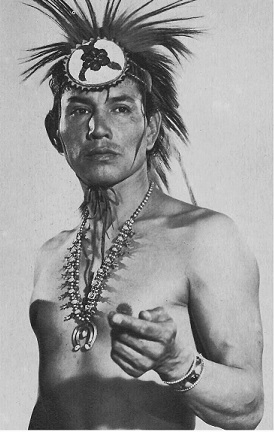
Jay Silverheels (born Harold J. Smith) was a Canadian Mohawk Indian, who got his start in movies as a stuntman.  He, too, had a long career before The Lone Ranger, playing mostly characters named Black Buffalo, Yellow Hawk, and Spotted Bear. Afterwards he continued to work, playing Indians in Laramie, Branded, Daniel Boone, Gentle Ben, and The Brady Bunch, and a non-Indian on Love American Style.  Apparently he was not aware of the gay subtext, either.

But lots of gay kids were aware.  In The Best Little Boy in the World, a classic gay Boomer autobiography, John Reid states that he first figured "it" out through his fantasies of the Lone Ranger and Tonto riding into the sunset together.

The 2013 re-invention starring Johnny Depp and Armie Hammer effectively heterosexualized both characters.

Jan 6, 2020

Alice Through the Looking Glass

Lewis Carroll's books, Alice in Wonderland and Alice Through the Looking Glass, are supposed to be nonsense.  Characters appear and disappear at random.  There is no plot, just a series of incidents.  There is no goal.  Things happen, and Alice wakes up.

There are three ways that you can adapt these books for movies or tv.

1. You can stay true to the original books, and have Alice faced with a random series of events that make no sense.
2. You can play on what would happen if Alice returned to England and insisted that she had actually been to Wonderland:  a grim story of a girl undergoing Victorian cures for insanity.
3. You can make Wonderland a real fantasy or science fiction universe, with internal consistency and logical plot developments (good luck!)

The 2016 Alice Through the Looking Glass did #3, with a little of #1 and #2.  The result varies tremendously in tone, and has about as much to do with the original book as The Lord of the Rings has to do with professional baseball.

Alice (whose last name is Kingsleigh, not Liddell), is grown-up, and who is played by 27-year old Mia Wasikowska, is a sea captain, with a domestic problem: her ex-suitor Hamish (Leo Bill) has bought her father's company (um..Alice's father was a college professor), and will throw her mother out unless she gives up her adventuring life and goes to work as a clerk in his firm.  When she refuses, her mother has her committed to an insane asylum under the evil Dr. Addison Bennett (Andrew Scott).

Got all that?  As turgid as a George Elliot novel.

Then Alice goes through the looking glass, gets involved briefly with some nonsense shenanigans involving chess pieces and Humpty Dumpty, then plummets into Wonderland (now called Underland), where she is given the task of curing the life-threatening depression of the Mad Hatter (Johnny Depp).

He's depressed over his family being killed a jabberwock attack when he was a boy, so the White Queen (Mirana of Marmoreal) talks her into going back in time to try to prevent their deaths.

To do so, Alice has to steal something from the chronoscope from the God of Time (Sacha Baron Cohen).

Unfortunately, the exiled Red Queen (Iracebeth of Crims) is dating the God of Time.


She also gets involved with the feud between the White and Red Queens back when King Oleron (Richard Armitage) ruled Underland, and they were just princesses.

Got all that?

I don't.

But at least there's no hetero-romantic plotline.  The Mad Hatter does not express any romantic interest in Alice, or anyone else.  I expected Alice to fall for James Harcourt (Ed Speleers, top photo), the only Victorian who isn't shocked by her eccentricities, but she doesn't.

Jul 8, 2013

Johnny Depp's Lone Ranger: For Heterosexuals Only

Johnny Depp makes movies by heterosexuals for heterosexuals, positing a gloriously gay-free world of oddball outcasts who both swish and leer at the ladies: Edward Scissorhands, Benny and Joon, What's Eating Gilbert Grape, Don Juan Demarco, The Ninth Gate, Sleepy Hollow, Blow, From Hell, Pirates of the Caribbean, Public Enemies, The Tourist, Dark Shadows, and even Rango all begin and end with The Girl.  He says "all of my characters are gay," by which he means they all have gender-atypical mannerisms. None are gay.  Not even Ed Wood, who wears angora sweaters but falls for The Girl.  Not even The Libertine, who claims to like both men and women, but is shown with only women.

What about the Lone Ranger and Tonto,  the masked vigilante of "yesteryear" and his faithful Indian sidekick, a  classic gay-subtext couple, who roamed the West through twenty years of radio, tv, comic books, and movies without ever glancing at a lady?  In The Best Little Boy in the World, a classic gay Boomer autobiography, John Reid states that he first figured "it" out through his fantasies of the Lone Ranger and Tonto riding into the sunset together.

Nearly 60 years after the tv series ended and 30 years after the last of the cartoons, cameos, and spoofs faded away, Johnny Depp has re-invented the franchise with an origin story that has conservative stick-in-the-mud lawyer John Reid, aka the Lone Ranger(Armie Hammer), and outcast oddball Tonto (Johnny Depp) working together to capture the outlaw Butch Cavendish (William Fitchtner).  Along the way, they will discover that they can't trust anyone, neither the Indians nor the representatives of white government and big business.

To be blunt, the story stinks.  Butch Cavendish is both a spooky paranormal villain who eats the body parts of his victims, and a mercenary who teams up with an evil industrialist to steal silver from Comanche country.

 Tonto is insane, constantly feeding the dead crow perched on his head.

 John Reid is absurdly square, a Dudley Do-Right in a white hat (this beefcake shot is not from the movie).

There are three -- three! -- train-fight scenes, with leaps onto or off moving trains, fistfights atop boxcars, crashes into bandstands or bridges, shooting through walls, and rescues. I don't know why -- by the third, I wasn't paying attention to the plot anymore.

And Johnny Depp has once again heterosexualized everything he touches.  John Reid is in love with his brother's widow; he rescues her; they kiss.  Tonto's heterosexuality is established when he turns out to be a regular at a brothel. Butch drools and slavers over his female hostage.

There is a gay crossdresser: Frank, a member of Butch Cavendish's gang, likes to wear ladies' clothes, and implies that he wants to be "violated" by Tonto. (Played by Harry Treadaway, top photo, with his brother Luke in Over There).

So everyone is heterosexual except for a probably-gay crossdressing villain. Way to reinforce outdated homophobic stereotypes, Johnny!
Related Posts Plugin for WordPress, Blogger...