Showing posts with label superheroes. Show all posts

May 29, 2026

Kid Cosmic: Why is "Fry and Hamburg are gay!" big news? So are Craig and Eric, Nergal and Irwin, George and the Secret Keeper....


Kid Cosmic,
on Nickelodeon, stars Jack Fisher (left) as "Kid," a comic book-obsessed orphan boy  living in a desolate world consisting of his trailer, his Grandpa's junkyard, a retro 1950s diner, and an endless desert.  


Suddenly, for reasons, everyone who happens to be in the diner develops superpowers, and is tasked with finding the Rings of Power.  Stuck Chuck, a gay-stereotype alien baddie, eventually joins the team.

Just before Season 3 dropped, on February 2nd, 2022, showrunner Craig McCracken announced in a Twitter post that Fry and Hamburg are a romantic couple.

Who?


They're the diner cooks, visible on the right of this character photo.


 Fry (voiced by Eric Bauza, below) is a skinny, tattooed Italian guy  with super-stretching ability, and Hamburg (voiced by Fred Tatsciore) is a blond German hunk with the ability to exude multiple arm


On February 5th, McCracken further specified on his Instagram "how they met and fell in love": Hamburg graduated from a top culinary school in Europe, but wanted to cook "real food," so he got a job at the dingy diner in the endless desert, and fell in love with his coworker, Fry. 

They are very minor characters.  They didn't even get superpowers until Season 2, and even then, they were #10 and #11 in the superhero list, with no lines in most episodes.  I saw no gay hints about them in Seasons 1 and 2, but then, I wasn't looking closely: they were mostly background.  

So, on to Season 3.  I'll check every appearance of Fry and Hamburg, looking for holding hands, hugging, dancing together, a shared apartment, any hint, however minuscule, that they are being presented as a canonical romantic couple.

Back Story: In Season 2, the Galactic Heroes worked at an interplanetary diner as a cover while they tried to track down the missing Rings of Power.   When the Rings were all accounted for, they used them to defeat the Planet Destroyer, a planet-sized Big Bad.  In the fracas, the Rings were scattered all over Earth.

More after the break

Jan 4, 2026

Mr. Muscles

We all know that superhero comics were just an excuse to gawk at bodybuilders  in tight underwear, but the Mr. Muscles title was rather blatant.

It was created for the low-budget Charlton Comics company by none other than Jerry Siegel, co-creator of Superman.  The first issue, in 1956, was numbered #22 (talk about wishful thinking).

Former wrestler Brett Carson, the "world's most perfect man," was a blond Aryan demi-god in white shorts and a lavender vest, perfect not only in body but in soul:  "A healthy physique breeds a healthy mind," he exclaims.


The school system in the 1950s would agree.  Kids were being forced to do push-ups and sit-ups every morning before class, in the belief that exercise bred morality.


This was the "age of the chest," with bodybuilders like Steve Reeves and Dan Draper taking center stage.


And Bob Mizer's Physique Pictorial barely bothering to hide the real reason subscribers were checking out those muscular physiques.

More after the break

Jul 13, 2025

Dino Martin: Bisexual Rat Pack Kid


Dino, Desi, & Billy was a 1960s teen trio formed from the sons of two celebrity musicians, Desi Arnaz Jr. and Dino Martin, and their friend Billy Hinsche.  They released five boy-band style albums between 1964 and 1969, plus a lot of singles.  Some of them charted, mostly because the guys were famous and rather cute.


Dino was Dean Paul Martin, the son of Rat Packer Dean Martin.  He was very rich, very famous, and sort of talented, but not very focused.  He was good at so many things that he couldn't decide on one.


After his group disbanded, Dino played professional tennis and semi-pro football; he got his pilot's license; he studied medicine; joined the National Guard.  He started calling himself Dean Paul instead of Dino. He changed into a blond. He developed a spectacular physique.


And he acted, of course.  Not a lot -- he was too busy.  7 movies, mostly in roles as playboys or a woman's illcit lover; some guest spots on tv shows (including his Dad's Dean Martin Comedy Hour), and some "as himself" appearances on talk shows and game shows.


His most substantial role was in Misfits of Science (1985-86) as Dr. Billy Hayes, the hetero-horny scientist who drives around in an ice cream truck with a group of rowdy teenage superheroes. Kevin Peter Hall (left) had the ability to shrink. A pre-Friends Courteney Cox played a juvenile delinquent with telekinetic powers

More after the break

May 24, 2025

Superhero Sidekicks in Bondage

The pulp magazine covers of the 1930s and 1940s often featured a woman drawn in the style collectors called GGA or Good Girl Art, tied to something and about to be murdered or violated by a drooling villain, while the hero rushes to the rescue.  But in superhero comics, the teenage sidekick was either tied next to the GGA woman, or else tied up all alone, and while GBA is not an official comic book term, his muscles were displayed quite as prominently as her breasts, providing hours of fun and excitement for gay kids of the pre-Boomer generation.

The Human Torch’s sidekick Toro, nearly-naked, muscles straining, chest heaving, is tied spread-eagle in the path of a tank , tied to the barrel of a cannon, or being lowered into a buzz-saw machine.


 3 of the first 10 covers of Detective Comics after the introduction of Robin, and nine of the first thirty, feature a surprisingly fit Boy Wonder tied up and about to stabbed, shot, drowned, or otherwise violated, while Batman rushes to the rescue.


As World War II progressed, many other superhero comics followed suit. The magazine racks of every drugstore were overflowing with images of superheroes rushing to the rescue of bound-and-threatened GBA sidekicks.


Captain America rescues Bucky in eight of the first ten covers of his comic book, and fully half of the first thirty.  Bucky is often (but not always) drawn as a muscular teenager, and his green-skinned, fairy-tale ogre captors have devised much more creative methods of execution than Robin’s.  He is strapped to an operating table next to a monster, while a leering Nazi doctor prepares an injection; mummified and threatened with an Iron Maiden.


He is hanging from his wrists and threatened by hot coals....in a cemetery, about to be buried alive....thrown overboard with a 500-pound weight around his neck...

More after the break

Apr 6, 2025

Totalitarian Television: Underdog and Friends

When I was a kid, all of the grown-up men I knew worked in the great smoking factory that my Dad called "the goddam hellhole."  And all of the grown-up women were their wives, cooking and cleaning and raising their kids in the small square houses that stretched out to infinity in all directions.  Everyone assumed that this was my destiny, too.  When I grew up, I would spend every day in the goddam hellhole, and come home every night dog-tired and cursing to my small square house, where my wife and kids would be waiting.  

Most of the tv programs I watched offered an escape: Gilligan and the Skipper didn't work in a goddam hellhole, they were sailors, and Robbie Douglas' Dad and Uncle Charlie lived happily together without wives.  But if I got up too early on Saturday morning, or dared to watch tv on Sunday, a series of badly animated cartoons pushed obedience to Big Brother:

Tooter Turtle longs to escape his dreary pond in the woods, so he asks Mr. Wizard to hook him up with a new job: firefighter, lumberjack, pilot, astronaut, college student.  Catastrophe strikes, and Mr. Wizard returns him to reality with his chant: "Twizzle, twozzle, twozzle, twome, time for this one to come home."


Tennessee Tuxedo, a penguin voiced by Don Adams of Get Smart, thinks he is just as good as any human, so he and his friend Chumley get jobs as weathermen or movie producers, or start a rock band.  Catastrophe strikes.  Inevitably.  The theme song tells us: "He will fail, as he vies for fame and glory."  (Later it was changed to the less depressing "he may fail").

The message was clear: don't dream, don't aspire.  Conform.  No escape is possible.


Commander McBragg, a retired British army officer, told an unwilling visitor about his adventures in India, Africa, China.  But was he telling the truth, or making it all up?


At least they didn't have wives.  But the superhero Underdog (voiced by Wally Cox)  had a girlfriend, Sweet Polly Purebread.  And his alter ego wasn't a cool journalist, like Clark Kent, or a millionaire, like Bruce Wayne -- he was a shoe shine boy!

The cartoons were produced by Total Television.  Some originally appeared on King Leonardo and His Short Subjects (1960), and some on Tennessee Tuxedo and His Tales (1963) or Underdog (1964), but by the time I was watching, they were relegated to the ghetto of early Saturday or Sunday mornings.

At least they were better than Rocky and Bullwinkle.

Feb 19, 2025

Superman: You'll Believe a Man Can Fly

Superman first flew in 1938, and for the next 40 years he had comic books, movie serials, cartoons, and radio and tv series, but no feature films.  Nor, for that matter, did any superhero except for the tongue-in-cheek Batman (1966).

That all changed in December 1978.


 It was a dreary winter, dark, cold, and snowy, with movies about angst, tragedy, and lost love: The Deer Hunter, Same Time Next Year, California Suite, Moment by Moment, Oliver's Story.  I was depressed; a semester into college, and I hadn't met any gay people, or learned of any gay writers except Shakespeare and Oscar Wilde.  Superman was a bright spot, a cozy childhood memory (though it too had a cave of ice).

Director Richard Donner was careful to include every familiar aspect of the Superman myth: the doomed planet Krypton, the elderly farm couple of Smallville, the Daily Planet, Perry White, Lois Lane, Jimmy Olsen, the Fortress of Solitude, Lex Luthor. And some from the familiar TV Superman of the 1950s, who used to change clothes in a phone booth (no old-style phone booths left in 1978).

Indeed, everyone was so busy checking off their list of Superman conventions that they forgot to pay attention to the plot: Lex Luthor plans to drop a nuclear bomb on the San Andreas Fault, thus causing California to slip into the ocean, whereup he will get rich by selling prime oceanside real estate in Nevada.

Ok, that was ridiculous even for a comic book.

The Man of Steel was played by 26-year old Christopher Reeve, a virtual unknown (he had one movie credit and a few tv appearances). He was hired for his muscles, his square jaw, and for his uncanny ability to be both sexy and wholesome at the same time.

He didn't disrobe during the movie, but he favored us with some beefcake shots in teen magazines and in the faux-gay After Dark.

 He was interviewed in gay magazines, an almost unprecedent act of solidarity in the 1970s, and in 1982 he played a gay character, the protege of playwright Sidney Bruhl (Michael Cane) in Death Trap.  I can still remember the gasps of shock when the two characters kissed on-camera.


Gay-positive Christopher Reeve and his studly physique provided the only gay interest in Superman.  No buddy-bonding in high school, no boy pal, no subdued homoromantic sniping with Lex Luthor.

It was a heterosexual love story, and rather a sappy one.  Audiences twittered and squirmed when Superman and Lois Lane (Margot Kidder) flew endlessly through the skies of Metropolis hand in hand, while Lois thought: "Can you feel what I feel? Do you know what you're doing to me?"

On the other hand, she wasn't a complete Girl Scout.  She asked, "How big are you...um, I mean, how tall?", leading to considerable speculation about the Man of Steel's package.

Christopher Reeve was paralyzed in an equestrian accident in 1995, and died in 2004.  Margot Kidder died in 2018.  They're both gone, but that magical night in the midst of a cold, dark, dreary winter lives on.


Skyler Gisondo's Hot/Hung Photos, Part 2.  Skyler plays Jimmy Olson in the 2025 Superman movie.


Dec 27, 2024

Jeff East: Tom Sawyer's boyfriend, Disney teen, young Superman, n*de fratboy, Pumpkinhead prey


If you were  a kid in the 1970s, Sunday night meant either church or The Wonderful World of Disney, countless movies set in the wilderness chopped up into 40-minute segments.  It was dreadful, but at least you got to see a cadre of teenagers personally selected by Walt or Roy Disney to represent "youthful masculinity":  Tommy Kirk, Kurt Russell, Tim Considine, James MacArthur.  
And if you could tell your fundamentalist, "movies are sinful" parents that you were going to the library downtown and sneak into a matinee, you could see Jeff East and Johnny Whitaker playng boyfriends.

Born in 1957 in Kansas City, Jeff had virtually no acting experience when he was chosen from among 1,000 hopefuls in open auditions to play Huck Finn in Tom Sawyer (1973), with Johnny Whitaker as Tom.

They appeared together again in Huckleberry Finn (1974), with a romance that would be impossibly overt today.

Plus they both showed bare chests and backsides, which would never be permitted today.  


Jeff went on three Wonderful World of Disney movies about big animals.  Disney loved animal stars.

Return of the Big Cat (1974): he has to save his sister from a cougar.

The Flight of the Grey Wolf (1975): he tries to re-introduce a wolf into the wild.  Nobody flies.

The Ghost of Cypress Swamp (1977): he has to save his dog from a panther, and runs afoul of a crazy guy.

This was the era of the big name teen idols like Shawn Cassidy, and a guy who fought panthers couldn't compete.  Jeff got very little attention in the teen magazines.


Jeff moved on to his first "adult" role as a college student who participates in a deadly hazing in The Hazing (1977),  also released as The Case of the Campus Corpse to make it seem like a comedy.  

Again he takes everything off -- he spends about half the movie in nothing but a jockstrap.


And he has a painfully intense, gay-subtext romance with his costar, fellow college student Charles Martin Smith.

Charles Martin Smith went on to display his goods in Never Cry Wolf (1983), about a government researcher living with wolves.  

What's with these guys and their wildlife?

More after the break

Mar 7, 2024

Lou Ferrigno and Bill Bixby: Bodybuilder and Buddy

Speaking of bodybuilder buddies, when Bill Bixby finished his gay subtext series My Favorite Martian and The Courtship of Eddie's Father,  he cashed in on the 1970s superhero craze in The Incredible Hulk (1977-82).

He played the antiheroic Marvel comic book character Bruce Banner, heterosexualized by being renamed David (Bruce "sounded too gay") and a getting a dead wife. When he gets angry, David transforms, Jekyll-Hyde style, into the green-skinned, muscular Hulk, who has super-strength, subhuman intelligence, and a nasty temper.  Fortunately the Hulk knows enough to avoid harming good guys or bystanders, and he usually disarms or scares the bad guys rather than killing them.


Like The Fugitive, David is wandering the countryside, trying to find a cure for his "problem," fleeing an tabloid reporter (Jack Colver) obsessed with him, and getting involved with people's personal lives along the way.


The Hulk was played by 26-year old bodybuilder Lou Ferrigno (left and top), a multiple Mr. Universe and Mr. America contender whom I met when I was working for Muscle and Fitness; he appeared on the cover at least once a year.

Other than the documentary Pumping Iron, this was his first screen appearance, but soon his physique and his inspiring story -- he had been nearly deaf since childhood, and had a slurred voice -- propelled him into fame.  After The Incredible Hulk, he had starring roles in Hercules (1983), Sinbad of the Seven Seas (1989), The Cage (1989, with James Shigeta as the villain), and The Incredible Hulk TV Series (1996-97), where the Hulk could speak.   A special favorite of kids, he appeared as himself on Mr. Rogers' Neighborhood and Where in the World is Carmen Sandiego?


I don't know if there were any gay subtexts in the series -- it was on Friday nights, so I never saw it -- but there was an off-screen bromance.  Bill became Lou's mentor and confidant, and like Paul Newman and Rocky Graziano twenty years before, they were often seen socializing together off the set.

I remember them coming into the Muscle and Fitness editorial office together, looking for all the world like a gay couple, especially Bill in his tan suit and sunglasses.

In his memoirs, Lou stated that he doesn't like to watch The Incredible Hulk now because it is too sad.  Bill "was like a brother to me.  We grew together.  I miss him."

Bill Bixby was a gay ally, of course, and Lou Ferrigno always seemed perfectly fine with the adulation of gay fans.  When he appeared on the reality series The Apprentice, he was fine with the elderly gay icon George Takei commenting on his  hotness of his semi-nude body, but got upset over a joke that criticized his fashion sense.

Lou is now appearing on the webseries The Incredible Ferrignos, in which his entire family, all certified personal trainers, offer make-overs to families with unhealthy diet and exercise habits.

Lou Ferrigno, Jr., (born 1984) starred in two of David DeCoteau's nearly-gay movies: 1313: Hercules Unbound! (2012) and 1313: Night of the Widows (2012).

I get more of a gay-friendly vibe from Brent (born 1990).  He's not an actor, but you can see lots of shirtless pix on his facebook page.

Jan 20, 2024

The Top Ten Ways to Dispatch the Young Allies


W
e fight together through stormy weather.
We're out to lick both crooks and spies!
We won't be stopped and we can't be stopped.
We are the Young Allies!


The Young Allies first appeared as a backup feature in Captain America #8 (1941), and soon spun off into their own 20-issue title (1941-1946).  They were extraordinarily popular during World War II, also appearing in in Complete Comics #2 (1943), Kid Komics #2-#10 (1943-1944), Amazing Comics #1 (1944), and, after the War, in Marvel Mystery Comics #75-83 (1946-47).

The group consisted of Bucky and Toro, the teen sidekicks of Captain America and the Human Torch,  plus four heavily stereotyped non-superheroic teenagers: the working-class stiff Knuckles (Percival Aloysius O'Toole), the swishy rich kid Jeff (Jefferson Worthing Sandervilt), the tubby Tubby (Henry Tinkle), and the minstrel-show reject Whitewash Jones.

Although they were out to "lick both crooks and spies," they mostly fought Nazi and Japanese super-villains.  Almost every cover illustration depicted at least two of the four non-superheros tied up and awaiting a horrifying doom, while Bucky or Toro or both rushed in to save the day.

In their regular titles, Bucky and Toro were constantly being rescued by their adult chums, so I guess they wanted to be the heroes for a change.

Of course, any male-male rescue in a world of men rescuing women is going to have a gay subtext.

Here are the ten most creative ways that super-villains conjured up to dispatch the Young Allies:

1, A tank of carbon monoxide. Wouldn't strangling them work just as well?  Notice that Knuckles is helping, so there will be three heroes, and they can pair off nicely at the end of the story.


2. All four face a stabbing machine.  Notice Adolph Hitler behind the Red Skull.  The covers have no connection to the stories inside, so I have no idea why the four are drawn as middle-aged rather than young teens. Maybe some sort of aging gas?


3. Just Jeff and Tubby this time, getting racked on a "Stretcher" machine run by skeletons in green pants.


4. Here Knuckles is helping Toro and Bucky rescue the other three from guillotines, but it actually looks like the evil Nazi cultists are planning to stab them.  Notice that Knuckles barely misses hitting Bucky in the butt.


5. Tubby and Jeff are facing death by giant octopus.

More after the break.


Nov 26, 2023

Superman: A World of Jimmy Olsens

In an April 1940 episode of the radio Adventures of Superman, the Man of Steel helped a young boy named Jimmy Olsen protect his mother's shop from racketeers.  Sensing audience identification, the producers soon gave Jimmy a part-time job at the Daily Planet so he could follow leads on his own, snoop around abandoned warehouses, get into trouble, and require lots of nick-of-time rescues.

Jimmy arrived in Superman comics in November 1941, somewhat older, perhaps seventeen.  He was a redhead, like the cliche sidekick in boys' adventure novels of the period, and his v-shaped torso suggested muscleman potential.  But he was never a sidekick, like Robin to Batman  or Bucky to Captain America.  Jimmy never lived with Superman, he never learned Superman's secret identity, he only participated in the adventures by accident.  Was he homoromantic partner, or merely a coworker and pal?  
.

On the TV Adventures of Superman (1952-58), Jimmy Olsen (ack Larson, top photo and left ) seems mostly a coworker to Superman (George Reeves). We rarely see the two together, except on the job, and even then, Lois (Noel Neill) usually forms the third.  Jack Larson, who died in 2015, was gay, and stated in interviews that he was out on the set during the period; maybe that explains why he kept Jimmy carefully free of any romantic feelings for Superman.

When Jimmy Olsen got his own comic book title in 1954, the gay subtexts began to proliferate.  Jimmy was Superman's "pal," a euphemism like "special friend."  The two went out to dinner and on vacations together; they broke up, realized how much they cared for each other, and reconciled.  Jimmy had a special signal watch that allowed him to summon Supe whenever he wanted to; but it also worked as an emblem of their love, like a wedding ring.  

Since the pal comic folded in 1974, several comics have hinted that Jimmy is gay, most recently in 2016. But what about the tv and movie Jimmya?


1. In the Superman movie series starring Christopher Reeve(1978-87), Jimmy was played by Marc McClure.  Supe was infatuated with Lois Lane, so they didn't develop any gay subtext.


2. Lois and Clark: The New Adventures of Superman (1993-97) starred Dean Cain  and Terri Hatcher as the famous couple (yes, now a couple), with the standard antipathy turning into romance ("He's so...arrogant!").   Jimmy was played by Justin Whalin, a former child star (the child of lesbian parents in a 1993 School Break special). Given the hetero-romantic story arc, it would seem that Jimmy would be a third wheel, but he actually has an unrequited crush on the hunky Clark. And there are a few Jimmy-rescues.


3.  Smallville was about Superboy, the teenage Clark Kent (Tom Welling). Jimmy (Aaron Ashmore, left) was not introduced until Season Six, when college graduate Clark arrived in Metropolis.  Jimmy had at least two girlfriends during his three years on the program, and expressed no romantic interest in Clark or Superman.


4. Superman Returns (2006) cast Sam Huntington as a Jimmy Olsen who is little more than a work colleague to the Man of Steel (Brandon Routh.


5. In Supergirl (2015-2021).  Mehcad Brooks plays a grown-up James Olson, with no Superman around and an on-off romance with Lois Lane's sister, Lucy.


6. In Batman v. Superman: Dawn of Justice (2016), Jimmy (Michael Cassidy) is a CIA agent who is killed without ever meting Superman (Henry Cavill)

7. Not a very good record.  Where there is a gay subtext at all, it is between Clark Kent and someone else. But maybe the upcoming Superman: Legacy (2025) will give us some gay-subtext interaction between Supe (David Corenswet) and the cub reporter (Skyler Gisondo).

Update: Nope


Nov 3, 2023

Ahhhh! The Horrible, Heteronormative, Offensive, Disgusting, No-Good End of the Marvel Cinematic Universe


The Marvel Cinematic Universe is a huge series of movies starring Marvel superheroes, who all know each other, interact with each other, and refer to events and situations from previous movies, so you have to watch all of them in order to understand what the heck is going on.  Every origin-story movie involves a superhero meeting, losing, and winning his True Love.

1. Iron-Man, aka Tony Stark (Robert Downey Jr.), head of the giant corporation that provides technological stuff, falls in love with his former assistant Pepper.  They retire, move to a farm, and have a kid.

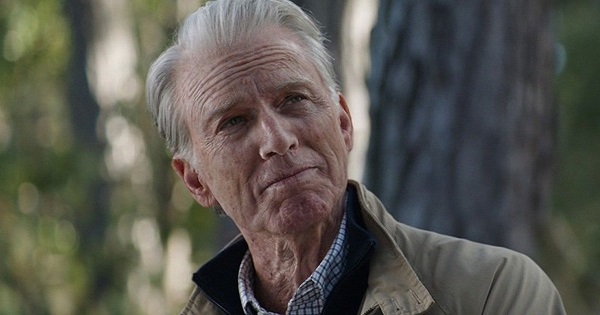
2. Captain America, aka Steve Rogers (Chris Evans, top photo), a World War II soldier turned into an Axis-fighting machine, falls in love with Peggy, one of the scientists working on him.  He's trapped in an iceberg for 70 years, leaving Peggy to grow old. But when he emerges, he still hangs out with her.  


3. Ant-Man (Paul Rudd) falls in love with Hope, daughter of the scientist who invented his shrinking suit. He has a daughter from another relationship, I think.

4. Hawkeye, aka Clint Barton (Jeremy Renner, left), retired from the superhero business to move to a farm, get married, and have some kids.

5. Peter Quill (Chris Pratt, below), leader of the Guardians of the Galaxy crime-fighting team, falls in love with his coworker Zamora.  

6. The Hulk, aka Bruce Banner (Mark Ruffalo), had a True Love in one move, another in a second, and then fell in love with fellow superhero The Black Widow.

7. Superhero Scarlet Witch, aka Wanda Maximoff, fell in love with  the android Vision (Paul Bettany), but he was killed.

There are lots more, but I'm getting tired. 

After the origin story, the True Loves are barely mentioned, especially in the ensemble movies titled the Avengers.  But apparently they were always there, forming the basic motive for each superhero's life and work, and at the end of the movie series they come roaring back like the Second Coming of Christ.


An ongoing plot arc is an attempt to track down all of the Infinity Stones, like Tolkien's Rings of Power but much more powerful, because an evil demagogue named Thanos wants to use them to wipe out 50% of all sentient life in the universe (that's right, I said the universe).  The team tries to keep him from getting the stones, then tries to stop him, but in Avengers: Infinity War (2018), he succeeds.  Snap!  Half of the sentients in the universe crumble into dust, including a lot of superheroes and their True Loves, but never both.

Imagine the chaos!  We're so interconnected that civilization would definitely collapse.  But here the economies and governments of the world seem fine; survivors are traumatized, but they manage to put up memorials to their lost True Loves and go back to high school classes, museums, pop music, and restaurants. There's actually a scene in a group therapy session, where a guy talks about his first date since the Snap -- with another guy, making him the first and only identifiable gay person in any Marvel Universe movie.

In Avengers: End Game (2020), the surviving superheroes figure out how to go back in time and prevent Thanos from getting the Infinity Stones, thus bringing everyone back.  There are lots of tracking each other down and "we need to work together" scenes, and a long, long, loooo-ng battle.  The Snap is reversed, everyone returns, and the long, long, looo-ng batle continues, involving everyone who has ever appeared in any movie fighting with swords, monsters, and energy blasts. 

I fell asleep.  When I awoke, the battle was over, Thanos was dead, and about 20  superheroes are sitting by a lake, saying "I miss her" about True Loves who died before the Snap or during the battle (a slight exaggeration, but I did count five "I miss her" statements). 

But the movie isn't over: we have another 45 minutes depicting 2,000 other superheroes reuniting with their True Loves and setting up heterosexual nuclear families. Again and again and again!


Just when you think everyone is paired off or missing "her," Captain America has to go back in time to return the Infinity Stones to their proper place, so the whole thing doesn't happen again.  Except he comes back as an old man.  He explains that he decided to stay in 1947, reunite with his True Love, and live the next 80 years with her.  We close to the two in their 1940s Levittown tract house, dancing and gazing into each other's eyes.  

I get it; the sole purpose of being a superhero is to provide men and women with an opportunity to gaze into other's eyes forever.  This is the meaning of life, our sole reason for existing.  Gay people absolutely do not exist. Do you have to rub it in, over and over and over and over and over?

To be fair, Thor doesn't settle down on a farm with his True Love or miss Her.  He joins the Guardians of the Galaxy, fighting intergalactic crime with Peter Quill and Drax the Destroyer (both of whom miss Her).  

Related Posts Plugin for WordPress, Blogger...